

What Is a Blockchain Cryptocurrency
In this post, we’ll take you through what a blockchain cryptocurrency actually is. It sounds techy, but at its core it’s just digital money that lives on a shared record - what we call a blockchain. A blockchain cryptocurrency is a coin or token created and maintained on that chain. I like to think of it as money that doesn’t need a bank or a firm to move.
Let’s review what a blockchain cryptocurrency is at its core: it’s a form of digital money stored on a decentralized database. That database is spread across many computers, each holding a copy. No single person or firm controls it. This setup builds trust because everyone can see the same facts. You can send funds directly to another person with no middleman, and the ledger tracks assets making every step open.

Blockchain empowers the individual.
That quote sums up why this matters. The ledger is permanent and auditable, which can give regular people more control over their cash. In this post, we’ll break down how it works, what makes it safe, and where it shows up in daily life. I’m not a company or a crypto pro - just someone who’s spent time with the source material and wants to share it clearly. The topic may seem big, but we can cut it down to size.
When you first hear the phrase what is a blockchain cryptocurrency, you might picture odd coins on a screen. But it’s better to picture a book of records that lives everywhere at once. That book isn’t in one building; it runs on machines provided by volunteers. Anyone can view it. That plain fact is the heart of the whole thing.
How a Blockchain Keeps Records
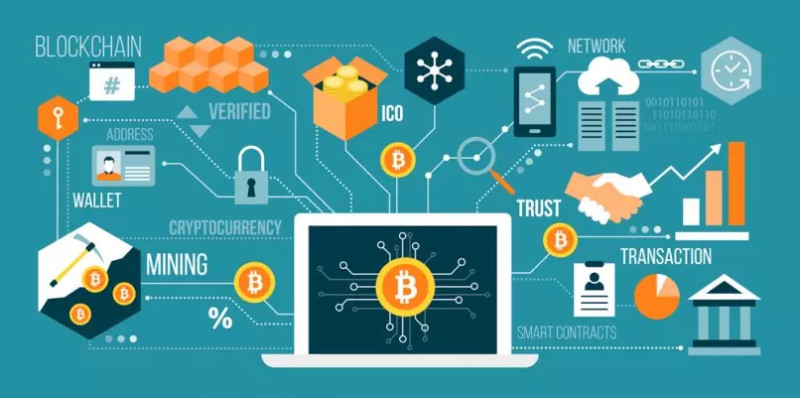
So how does this shared record actually work? A blockchain is a type of distributed ledger. Think of a big spreadsheet that lives on thousands of machines at once. When someone sends a blockchain cryptocurrency, that move gets written as a transaction. The transaction joins a block with many others. Each block links to the one before it through a crypto hash. That link makes a chain that’s hard to break.
Anyone can view a blockchain because it sits on the network, not in one office. The data is encrypted with public and private keys. A private key is like a secret code you use to sign a spend, and a public key is like an account number others can see. This way you can safely send money without a bank or payment app. The system checks the signature and lets the move happen.
The ledger is sometimes called Distributed Ledger Technology (DLT). It uses decentralization and encrypted hashing to make the history of any digital asset unalterable and transparent. At its most basic, a blockchain is simply a distributed ledger that tracks transactions among parties. That simple line helps me keep focus when the talk gets thick.
Key Traits of the Ledger
Main features of a blockchain
- Decentralization - no single entity runs it
- Distribution - copies live on many nodes
- Cryptographic security - hashes lock each block
- Immutability - written data stays put
- Transparency - all can view history
- Permissionless access - anyone can join public chains
- Consensus rules - nodes agree via PoW or PoS
- Pseudonymity - addresses hide real names
These traits matter when you ask what is a blockchain cryptocurrency and why it’s different. The mix of decentralization and encryption means the history of any digital asset is open and can’t be secretly changed. That’s a big shift from old paper records or private bank logs. The ledger is replicated across many computers, making it resilient to attacks or failure.
One more point: the ledger is permissionless in public networks, meaning you don’t need approval to read or send. In private networks, access is limited. But the core idea of a shared book stays. I think this open model is why so many see the tech as a tool for fair access to money.
Hash Functions and Keys
If you want a beginner’s guide to cryptography , start with hash functions. A hash takes input data and turns it into a fixed string. It’s one-way: easy to make, near impossible to reverse. Same input always gives same hash. Change one letter and the hash flips completely. This property chains blocks together.
Public key cryptography builds on this. Your private key signs transactions, and the network checks the signature with your public key. Only the person with the private key can spend the funds. This is the lock that keeps a blockchain cryptocurrency safe from thieves. A public key works like an account number and is mathematically linked to the private key.
Every transaction is signed with the private key. The network verifies the sign using the public key, confirming only the holder could have authorized the spend. I find this elegant because it replaces a bank stamp with math. No need to trust a clerk - just the code.
Blocks and Mining Work
Each block holds a header and a set of transactions. The header points to the prior block - that’s the chain part. On networks using proof-of-work, miners race to solve a hard math puzzle. The winner adds the block and earns new coins. This process confirms trades and makes cheating expensive.
A block chain is a permissionless distributed database based on the Bitcoin protocol that maintains a continuously growing list of data records hardened against tampering.

Mining sounds loud and power hungry, and it is. But that cost protects the ledger. To fake a transaction, a bad actor would need to redo all later blocks. On big networks, that’s not worth it. The reward gives people a reason to keep the system honest. The mining output is easy to verify but imposes steep costs on bad actors.
The header contains info about the block and a reference to the previous block’s header. This creates the chain. Blocks are cryptographically chained together. That structure is why we call it a blockchain. A blockchain cryptocurrency relies on this chain to prove who owns what.
Consensus Keeps It Fair
Consensus is how nodes agree on the truth. In proof-of-work, miners must find a valid hash. In proof-of-stake, validators are picked by how many coins they lock up as collateral. Both ways stop one person from rewriting history. The rules are built into the software.
This matters for a blockchain cryptocurrency because without consensus, the ledger would split or lie. The network syncs itself. You don’t need a referee. That’s a wild idea if you grew up with banks as the source of truth. Nodes agree on the state of the ledger through rules such as PoW or PoS.
Consensus mechanisms aren’t perfect, but they are clever. They turn trust into math and shared effort. I like that no boss sits at the top. The group of nodes keeps the book straight. That’s the quiet engine under every coin move.
Why Digital Money Matters
The value of this tech comes from two things: persistence and decentralization. Together they make a cheap, accurate, and secure network. That can cut friction in moving value. Some see it as the future of money because it reduces the need for middlemen. The fundamental value stems from those two critical properties.
Cross-border payments show the gap. Old wires take days and cost plenty. On a chain, transfers can finish in seconds for pennies. One example from the past: Litecoin moved $99 million in minutes for forty cents. That beats typical bank fees by a mile. The slowest blockchain may take an hour; the fastest confirm in four or five seconds.
When I think about what is a blockchain cryptocurrency, I see a tool that shrinks distance. A person in one country can pay another without a wire desk. The ledger does the proof. That’s a real shift for folks who send money home.
Banking and Real Estate Uses
Banks are testing faster settlement. Many U.S. blockchain companies like IBM have run pilots with ledgers. Real estate could get a national title database. That would speed up home sales and maybe lower costs. Some even talk about blockchain in the insurance industry to trim rates through clear records.

The slowest chains still confirm in about an hour, while fast ones do it in under five seconds. That range shows the tech is still growing. But the direction is clear: less waiting, more proof. A national database of property titles could expedite transactions and shrink transaction costs. It could also lower insurance and interest rates in the long run.
Maersk and IBM used a joint venture to streamline shipping on a ledger. That shows the idea reaches beyond coins. The ledger can track goods as well as money. I think that’s neat because the same tool serves many needs.
Health Care and Government
Health records are scattered across many systems. A blockchain could let patients hold their own data and share it safely when needed. Startups have built tools on this idea. Government functions like votes, IDs, and registrations could also use the ledger for clear audit trails. The industry’s fragmented IT hinders data portability today.
Cyberattacks cause massive damage to central systems. A shared ledger reduces single points of failure. That is why some towns and agencies look at the tech for elections and car tags. Trust is scarce, and the ledger can supply it. Blockchain can improve security, transparency, and auditability for government functions.
Health care firms like SimplyVitalHealth offer blockchain-based solutions. The goal is to give each user access to their records. Patients could share data securely when needed. That’s a far cry from fax machines and siloed files. The potential to cut friction is large.
Challenges to Know
Problems still in the way
- Regulation - laws lag behind open networks
- Energy use - proof-of-work burns power
- Scalability - storing all txs gets heavy
- Security risk - a 51 percent attack is possible
Through a permanent, auditable, and tamper-proof ledger, blockchain can provide that trust and that value.
Don’t skip this part: energy is a real worry. Bitcoin mining uses as much power as a small country. That pushes newer networks to proof-of-stake, which is lighter. Scale is another hitch; every node keeps every transaction, so growth adds storage load. Capacity limits can increase costs and slow times.
A 51 percent attack is where one entity controls most mining power. It could alter the chain in theory, but on large networks it’s economically impractical. Regulation is messy because open architecture doesn’t fit old legal boxes. Custody of assets and legal frames are still evolving. Hey, this stuff isn’t all smooth.
Coins Versus Tokens
When you ask what is a crypto coin , the answer ties to the chain. A coin has its own blockchain, like Bitcoin or Ethereum. A token lives on another chain, such as ERC-20 tokens on Ethereum. Both are blockchain cryptocurrency assets but they sit differently. The coin is the asset; the chain is the data structure that records trades.
Coin vs token
- Coin - own blockchain
- Token - built on another chain
- Chain - the data structure
- Coin - the actual asset
Ethereum added smart contracts, which are programs that run on the ledger. They let developers issue tokens for music, tickets, or medical files. Non-fungible tokens (NFTs) prove ownership of unique items. That expands the simple payment idea into many uses. Tokens can represent any digital asset and verify authenticity.
The term blockchain was strictly the transaction database of the Bitcoin protocol. Now it’s used more loosely for similar distributed databases. Knowing coin vs chain helps avoid confusion. I remind myself: the blockchain is the chain, not the coin. That small split clears up a lot of loud talk.
A Short History
The story starts with a paper in 2008 by Satoshi Nakamoto. The first Bitcoin transaction happened in 2009. In 2010, a man paid 10,000 BTC for two pizzas - a famous tale. Later years brought exchanges, merchants, and wide interest. By 2013 the market passed a billion dollars. Those are fixed facts, not trends.
Early milestones
- 2008 - Bitcoin whitepaper published
- 2009 - First BTC transaction
- 2010 - Pizza paid in bitcoin
- 2013 - Market cap over $1 billion
- 2015 - Over 100k merchants accept BTC
Those dates show steady growth from a niche email list to global talk. Later, big firms and even some governments tested ledgers. The key point: the core idea stayed the same while uses spread. Ethereum’s whitepaper came in 2013, expanding the concept beyond simple payments. History helps us see the tech is not a fad but a built thing.
In 2014, merchants like Overstock accepted BTC, and Ethereum raised funds via ICO. By 2015, Nasdaq tested private share records on a chain. These steps are part of the record. I find the pizza story funny, but it shows real value changed hands early.
Terms That Confuse People
Quick definitions
- Ledger - record of transactions
- Distributed - split across nodes
- Mutual Distributed Ledger - shared record in many spots
- Public vs private - open read or limited
- Permissionless vs permissioned - join free or by invite
People mix up coin and chain a lot. The chain is the record, the coin is the asset. Knowing these words helps when you read about blockchain technology in different fields. It keeps you from getting lost in hype. A mutual distributed ledger is a record shared in common and stored in multiple locations.
True peer-to-peer means all nodes equal, while decentralized may give some nodes extra privileges. Public blockchains allow open reading; private ones limit membership. These distinctions matter when someone says blockchain in a meeting. I try to pin down which type they mean before nodding.
Learning More on Your Own
If you wonder how do I learn blockchain , start with the original Bitcoin paper. It’s short and clear. You can also register on Coinbase to see a wallet and small trade. Hands-on beats only reading, in my view. The Library of Congress has a research guide with many links if you want more.
Some folks buy crypto with a business account for treasury. Others hunt for the best crypto bank account to bridge old finance and new coins. Neither is required to understand the tech, but they show real use. Books like Blockchain Basics or The Bitcoin Standard give plain intros.
I suggest writing notes as you read. The terms stick better that way. A beginner’s guide to cryptography helps with the key part. Don’t rush. The source material shows the topic is deep but the base is simple. You can learn at your own pace.
Other Projects and Ideas
You might hear of Concordium crypto or AI token crypto in chatter. These build on the same shared ledger idea with tweaks like ID checks or smart assets. The space keeps branching, but the base stays a tamper-resistant record. New consensus models aim to fix energy and speed issues.
A blockchain cryptocurrency is a digitally native asset that is recorded on a tamper-resistant, shared record-keeping system.
I hope this plain walk helped. The topic is big, but the core is simple: a shared, secure book of moves that anyone can check. That is what is a blockchain cryptocurrency in daily words. The ledger can reduce fraud and empower individuals. Ongoing research keeps pushing the edges.
Whether you care about coins, tokens, or just the ledger, the main point stands. A blockchain cryptocurrency lives on a chain that no one owns alone. That fact alone changes how we might think about money. I’ll keep watching as the tech matures, and I hope you do too.

Comments on “What Is a Blockchain Cryptocurrency? Let’s Break It Down in Plain English”
No comments yet. Be the first to share your thoughts.