

Top Cryptocurrency Insights for Investors and Curious Newcomers
Top cryptocurrency is not one coin sitting at the top of a chart. Bitcoin may lead by name and market cap, but Ethereum, stablecoins, tokenized assets, meme coins, and creator-linked tokens each tell a different story. A useful top cryptocurrency map has to cover tech, use, adoption, security, and risk. Otherwise it is just a list with extra steps.
Here is the map I would use. First, learn what each coin or token is built on. Then ask who uses it, what problem it solves, and how value moves through its network. Next, look at security and legal issues. A price chart can tell you what happened, but it cannot tell you whether a wallet is safe or a project has real users.
Reliable crypto news is one input for learning and decision-making, not a substitute for independent research or responsible risk management.
What Is a Crypto Coin?
If you have never held one, the plain idea of a crypto coin is simple: digital money recorded on a blockchain. Some coins have their own blockchain, while other assets are tokens built on an existing network. That difference matters because each coin has its own rules, users, fees, risks, and degree of control.
Core crypto terms
- Blockchain: A shared ledger used to record and check cryptocurrency transactions.
- Wallet: An app used to store, send, and receive cryptocurrency.
- Altcoin: A cryptocurrency other than Bitcoin, with Ethereum and Litecoin as examples.
- Token: A virtual asset on a blockchain that can represent value, utility, or another asset.
- Market cap: The total value of a circulating cryptocurrency.
- Bull market: A period when prices tend to move up.
- Bear market: A period when prices tend to move down.
- Whitepaper: A technical document that explains a project's technology, goals, and plans.
- Gas fees: The cost of processing an operation on a blockchain that supports smart contracts.
If you have seen what market cap means in a coin list, think of it as unit price combined with the number of coins in circulation. A token can sell for less than one dollar and still have a large market value if a lot of units exist. So a low unit price is not proof that a coin is cheap or safe.
How Top Cryptocurrencies Differ
There is no single test that decides which asset deserves the top cryptocurrency label. Market cap, trading volume, user activity, developer work, and public attention can each produce a different list. The right measure depends on the question you are trying to answer.
Major coin and token groups
- Bitcoin: A payment network with broad reach, low transaction costs, and a value that can swing sharply.
- Ethereum: A blockchain known for smart contracts, apps, and developer activity.
- Altcoins and other networks: Coins such as Litecoin or Solana, each with its own design and level of use.
- Stablecoins: Tokens designed to hold a steady value, often near a unit of fiat money.
- Real-world asset tokens: Blockchain-based records tied to assets outside the crypto world.
- Meme and creator coins: Assets often driven by community attention, timing, stories, and online popularity.
Bitcoin has one kind of role, Ethereum has another, and many newer assets focus on payments, speculation, creators, or traditional finance. Trending charts can also move because of price gains, added liquidity, or trader interest. That makes the chart useful for market attention, but not enough for judging the project itself.
A low price does not make a coin cheap. It only tells you what one unit costs.
Why Crypto Coin Lists Need More Context
Sites that sell lists of crypto coins often try to answer what crypto to buy . That can be a useful first pass, but a list does not know your goals, time span, or ability to lose money. It also cannot tell whether the research behind a coin is sound.
The source behind one low-price coin list made a useful point. The cheapest token is not always the best one. Real users, real activity, and signs of use matter more than the number printed beside the unit price. A token under one dollar can still have a large market cap, weak security, or little sign of life outside trading activity.
Checks for a coin or token
- Name the product and the problem it tries to solve.
- Look for users, transactions, or other signs of real activity.
- Read the whitepaper and check whether the stated plans match the product.
- Separate unit price from market cap and total supply.
- Check what the token represents and what rights, if any, it gives its holder.
- Look at fees, network use, exchange choices, and wallet support.
- Find security reviews, risk notes, and links to official sources.
An exchange listing can draw attention, but it does not prove that a project is sound or that its price will rise. A launch, presale, reward program, or celebrity post can have the same effect. I would treat each as a reason to read more, not as a reason to move money.
Stablecoins and the Search for Price Stability
Most crypto assets move with supply, demand, and mood. Stablecoins are meant to reduce that swing by holding a steady value, often near a dollar or another unit of fiat money. Tether's USDT and Circle's USDC were the main stablecoins named in the global adoption research, while EURC and PYUSD were also described as growing.
The idea is harder than it looks. A 2014 Ethereum Foundation note said the foundation did not plan to add price stabilization to ether. Its research split the problem into two parts: finding a decentralized way to measure price, then issuing or taking back currency units to move supply toward the target. Suggested signals included outside price data, mining difficulty, transaction fees, data storage, bandwidth, and transaction volume.
Schellingcoin is described as an untested experiment, so there is reason to remain skeptical of its operation.
Mining difficulty carries its own trap because it can rise from better technology as well as more demand. Transaction volume can be pushed by an attacker. Some proposed systems used two coins, margin calls, or changing interest rates to support the peg. Each part adds rules that users must understand before they trust the stable value.
Stablecoin questions
- Which value is the token trying to track, and how closely has it followed it?
- Who issues the token and what rules apply?
- Is it used for payments, trading, savings, or settlement?
- How much activity can be seen on the network?
- What laws, licenses, or compliance rules apply to its issuer and use?
- What happens to the peg during a fast market drop or a wave of selling?
The adoption research described payment cards, merchant settlement, and links between traditional payment services and stablecoins. It also described different regional paths, including euro-linked and dollar-linked tokens. That growth matters, but it does not remove issuer, regulatory, market, or design risk. Stable means less movement, not no risk.
Real-World Assets on the Blockchain
Tokenization places a record or claim tied to a real-world asset on a blockchain. The broader source connects this work to payments, supply chains, digital identity, exchanges, and financial products. The aim is often to make ownership or settlement easier to record and transfer, but the token still depends on the legal and physical setup behind it.
Real-world asset checks
- Identify the asset tied to the token and where it sits.
- Check the legal rights of the token holder.
- Find out who holds or controls the linked asset.
- Review how transfers, sales, and settlements work.
- Check network fees, liquidity, and actual users.
- Look for tax, regulatory, custody, and smart-contract risks.
One source points to a market-cap ranking for real-world asset tokens, but the text provided does not include the token names or figures. So I will not fill that gap with guesses. The better lesson is the method: trace the token back to the asset, rights, custody, fees, and rules around it.
A token related to stock or another financial product should not be treated as the same as direct ownership without checking the legal structure. Blockchain records can make claims easier to see, but they do not create the claim. The old risks still sit behind the token, and they can move with the linked market.
What Global Adoption Data Shows
The 2025 Global Crypto Adoption Index combined on-chain and off-chain data for 151 countries with enough information. It measured value received through centralized services, retail-sized transfers, DeFi protocols, and institutional transfers over one million dollars. The rankings adjusted activity for purchasing power and used web-traffic patterns to estimate some service volumes. The report also warned that VPNs can make a user's location hard to judge.
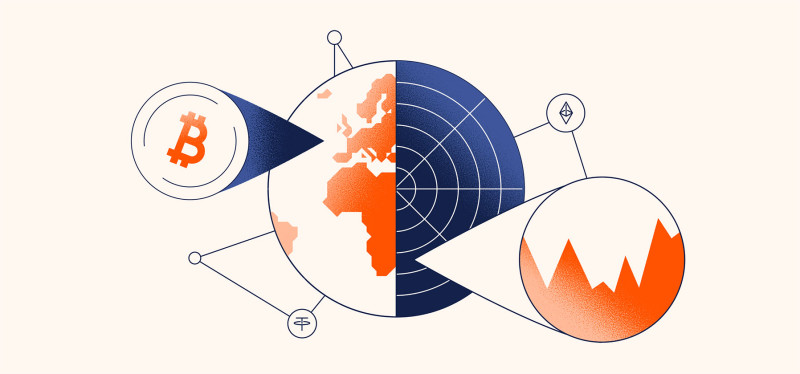
In that historical index, India ranked first, followed by the United States, Pakistan, Vietnam, and Brazil. When the view was adjusted by population, Ukraine, Moldova, and Georgia moved to the top. The report also removed a separate retail DeFi measure and added an institutional category. Spot Bitcoin ETFs and clearer rules in major markets were cited as reasons for greater institutional activity.
For the 12 months ending June 2025, the report recorded on-chain growth of 69 percent in Asia-Pacific and 63 percent in Latin America. Those figures belong to that study period, not a promise about later markets. Still, they show why adoption should not be judged through one exchange, one coin, or one wealthy country.
Reasons crypto use differs by place
- Remittances and cross-border transfers can create practical demand.
- Weak or restricted banking access can raise interest in digital dollars.
- Inflation and concern about savings can affect how people use crypto.
- Technical knowledge and easy access to phones and the web matter.
- Clear rules and institutional services can support larger activity.
- Connectivity, liquidity, policy stability, and financial rails shape long-term use.
The report describes the pattern as broad global expansion.
Creator Coins and the Creator Economy
Steve Yegge describes BAGS as a market for betting on the work of creators and small teams. A creator can launch a token in Bagsapp, and the token's popularity can act as a signal that the work may spread. Trading fees are treated as an exhaust supply that can fuel the creator. In his $GAS setup, he says he receives 99 percent of those fees under the arrangement made for the project.
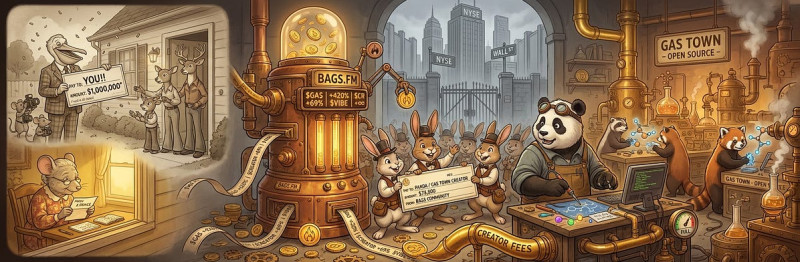
Yegge links this idea to AI coding tools. His argument is that small teams may be able to create software that once needed a whole company, giving many more independent creators a chance to compete. That makes an AI-linked crypto coin part of a wider bet on tools, attention, and creator work rather than only on digital scarcity.
Creator token checks
- Read the creator's financial disclosure before sharing the story.
- Confirm what the token does and does not control.
- Check whether the token represents ownership, equity, or only a market asset.
- Trace how trading fees reach the creator and what can change that flow.
- Look for a working product and signs of real users.
- Be cautious when a message asks you to buy one coin so another balance can be claimed.
I receive creator royalties/trading fees associated with $GAS trading on the BAGS platform, and I may benefit financially from that activity.
In Yegge's story, a message about creator earnings led to a process that asked for some Solana before funds could be claimed. The amount shown changed as more trades came in. He calls the broader activity gambling and says the token gives him no ownership in Gas Town or his work. A creator story can be real and the token can still carry heavy market risk.
Meme Coins, Low-Price Tokens, and Presales
Solana meme coins are often tied to hype, community, and timing rather than a plain cash-flow story. A token can climb because attention and trading volume rise, then fall when that attention moves elsewhere. The source did not name five trending coins, so any list would need fresh proof and careful checks before it had value.
Meme coin and presale checks
- Separate community talk from actual product use.
- Check whether the project has a working site, app, or code.
- Look at market cap, supply, and the share held by large wallets.
- Ask who can change fees, token rules, or the project's main systems.
- Check security reviews and the risks of connecting a wallet.
- Treat an exchange listing, presale, or reward offer as news, not proof of value.
The presale material in the source made another useful split. Some projects raised millions, while others built real products. The projects that showed both attracted the most attention from buyers. Funding can buy time, and a product can create users, but each answers a different question.
Some raised millions, while others built real products. The presales that achieved both were described as worth watching.
Mining Software and Pooled Mining Claims
Mining is part of some blockchain systems because computers compete to verify and record work. The source also uses mining difficulty as a possible signal when studying stable-value currencies. That signal is not simple, though, because difficulty can change with technology, price, and the entry or exit of large mining operations.
Mining research questions
- What work does the network ask miners to complete?
- Does the claim explain difficulty or only use the word mining?
- Could one actor move the signal being used to set a price?
- How would faster technology change the measurement?
- Are fees, software claims, and rewards tied to a named network?
Mining difficulty is more difficult to manipulate because the mining market is larger.
A search for pooled mining can lead to pages that mix network facts with sales claims. A page about crypto coin mining software needs the same care. The source does not endorse a pool or program, so the useful move is to trace the claim back to the network it names and the work it proves.
Crypto Cyberattacks and Security Checks
Security is part of the top cryptocurrency story, not a side note. A historical report estimated cryptocurrency cyberattack losses at about 3.8 billion dollars in 2022. It studied attacks that stole at least one million dollars and found that large attacks were becoming more frequent and often moved toward losses of 100 million dollars. That was a record of what happened, not a forecast.

The report named weak smart-contract settings and price errors as key paths into decentralized finance. Flash loans could help create an unintended price gap that an attacker uses. Keys were another weak point. Attackers also used phishing and harmful app downloads to target personal wallets, while poor controls at connected companies exposed signing systems.
Security controls from the report
- Have smart-contract code reviewed by accredited, transparent testers.
- Test pricing logic and other system settings that can be abused.
- Keep signing keys offline or air-gapped when possible.
- Use multi-signature controls for core validation systems.
- Separate large assets into vaults and other controlled stores.
- Limit the power of hot wallets and privileged keys.
- Use open code and bug-bounty programs where possible.
The top ten flash-loan attacks together produced more than half a billion dollars in losses.
Bridges and outside services can spread risk because one connected system may hold large assets or trusted keys. The Ronin Bridge and BNB Bridge were named as large outliers, while the Kucoin attack showed the cost of weak key controls. Security steps need to cover the whole setup, not just the blockchain a user sees.
Wallets, Exchanges, and Scam Warnings
A wallet is the app used to store, send, and receive crypto. The chain records the transactions, but the wallet and its keys control access. That makes wallet setup and key handling as important as the coin's price. A familiar name on a token list cannot protect a signing key from a fake site or harmful app.
Wallet and exchange checks
- Know which chain and wallet support the token.
- Check who controls the signing keys.
- Keep high-value keys offline or air-gapped where the setup allows.
- Use multi-signature controls for core systems.
- Separate hot wallets, vaults, and larger stores of assets.
- Review exchange security, user-protection, and compliance changes.
Signing keys control access to wallets and the assets they hold.
For a new trader, the source suggests learning the basics, using trusted exchanges, starting with a small amount of capital, and learning common scams before taking larger risk. Those steps do not remove losses from bad trades or hacks. They do give a person more control over the part they can check.
A Plain Plan for Crypto Currency Investing
For investing in crypto currency , start with research rather than a price forecast. Questions about making money with crypto currency often pull people toward fast claims. The safer path is to learn the system, control the risk, and accept that some choices will lose money.
A repeatable crypto research routine
- Learn how blockchain transactions and wallets work.
- Read several reports on the coin, token, or network.
- Compare unit price, supply, market cap, fees, and actual use.
- Check security controls, connected services, and signing keys.
- Review regulation, taxation, and exchange user protections.
- Learn common scams, warning signs, and phishing methods.
- Study price charts and how transactions are verified.
- Start with a small amount and set a loss limit you can afford.
Regular reading can sharpen trading skills, but it cannot remove market risk or guarantee better results.
Past performance does not predict future results, and investors can lose their main amount. Prices can move fast after a hack, rule change, launch, or global event. Token prices also change when exchanges, wallets, and networks change. Good research narrows the questions, but it cannot promise a profit.
How to Read Crypto News With Care
News blogs cover projects and prices. Trading blogs discuss methods and charts. Education blogs explain blockchain, Bitcoin, Ethereum, NFTs, and DeFi. Community blogs hold opinions and interviews, while project-update blogs follow launches and network milestones. Each type can help, but each sees the market from a different seat.
Signs of a trustworthy crypto blog
- The writer's name, experience, and role are clear.
- Facts link to official documents or named data sources.
- Complex subjects are explained in plain language.
- Positive news and risk appear in the same coverage.
- The post avoids quick-profit promises and unrealistic forecasts.
- Uncertainty is stated instead of hidden.
- Corrections, dates, and changes in the story are made clear.
Compare several sources when an analyst, company, or project makes a large claim. Different people can read the same event in different ways. Newsletters, social accounts, forums, and site alerts can help collect views, but a social post is still not proof. I would check the original document, contract, code, or data before acting.
A One-Page Crypto Research Plan
I would keep the final research in one place so the market noise does not push the basic checks out of view. One page is enough for a first pass. The deeper work comes from reading the source documents and comparing them with other sources.
Final crypto research sheet
- Write down the coin or token name, ticker, and network.
- State what the asset does and who uses it.
- Record market cap, supply, fees, and unit price as separate facts.
- Check the whitepaper, product, code, and signs of real activity.
- Review smart contracts, bridges, exchanges, and connected services.
- Find where signing keys and large asset stores are held.
- Read creator fees, token rights, disclosures, and vesting terms if they apply.
- Note tax, regulatory, custody, and settlement issues.
- Compare news reports with official sources and other analysts.
- Write down the main failure risks before looking at the price again.


Comments on “A Practical Guide to Top Cryptocurrency Ideas, Trends, and Risks”
No comments yet. Be the first to share your thoughts.