

What Is a Stablecoin? How It Works, Where It's Used, and the Rules
Whenever I see the question “what is stablecoin,” I want to keep the answer simple. A stablecoin is a digital token built to hold a steadier value than Bitcoin or Ether. It tries to match another asset, such as the U.S. dollar, a euro, gold, a basket of crypto assets, or a system that controls supply. That goal makes stablecoins useful for payments, trading, savings, and blockchain apps.
A stablecoin is a programmable digital asset designed to maintain a stable, predictable value by being pegged, or tied, to another asset.
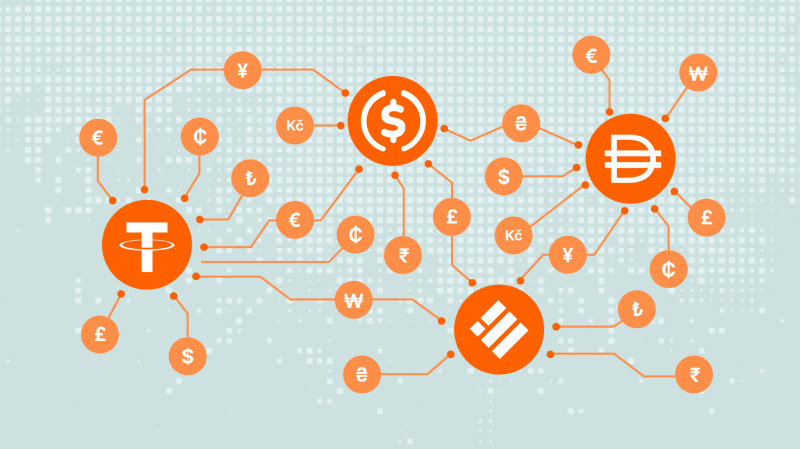
Not every stablecoin has the same design or risk. Some hold bank deposits and government debt. Others use crypto collateral, software rules, or a mix of both. Stablecoins first appeared in 2014, when Tether introduced USDT. Bitcoin had launched in 2009, while Ethereum later added the smart contracts used to build decentralized finance, or DeFi. Stablecoins kept the blockchain model but added a peg, so the token would not depend only on supply and demand.
How a Stablecoin Keeps Its Value
I find the easiest way to picture a stablecoin is as a claim on something else. A dollar stablecoin aims to be worth one U.S. dollar. A euro token may aim for one euro, while a commodity token may track gold or silver.
Common peg examples
- 1 USDC equals a target value of 1 U.S. dollar
- 1 EURC equals a target value of 1 euro
- 1 XUSD equals a target value of 1 U.S. dollar
- 1 XSGD equals a target value of 1 Singapore dollar
- 1 XIDR equals a target value of 1 Indonesian rupiah
The peg is a target rather than an unconditional guarantee.
A stablecoin may trade a little above or below its target. A bad reserve report, poor market confidence, or a problem with the issuer can cause a larger drop called a depeg. Hey, don't skip this part. A stated one-to-one peg is a design goal, not a magic promise that removes every risk.
Main Stablecoin Types
Most lists put stablecoins into four broad groups. The labels can overlap, but this gives you a clean place to start.
Four main types
- Fiat-backed: These tokens track government money such as the U.S. dollar or euro. An issuer holds cash or other permitted assets against the tokens.
- Commodity-backed: These tokens track an item such as gold or silver. The holder gets exposure to the commodity without storing the physical item.
- Crypto-backed: These tokens use ether, bitcoin, or other crypto assets as collateral. The collateral is usually worth more than the stablecoin issued against it.
- Algorithmic: These tokens use code, incentives, and supply changes to respond to their market price. Some designs also use collateral or other tokens.
Some sources place U.S. Treasury-backed and yield-bearing stablecoins in their own groups. That makes sense when the reserve assets and income method differ from a plain cash-backed token. The labels are not set in stone; what matters is the reserve, redemption rights, and rule system behind each token.
Reserve-Backed Stablecoins
Fiat is government-issued money, such as dollars, euros, or Singapore dollars. With a fiat-backed stablecoin, the issuer keeps reserves that correspond to the tokens in circulation. The reserve is meant to support the peg and let holders redeem their tokens.
Common reserve assets
- Cash and currency held for redemption
- Bank deposits
- Short-term government debt
- Repurchase agreements
- Approved money-market funds or similar liquid assets
When someone buys a token, the issuer receives fiat and records the token against its reserves. When someone redeems it, the issuer returns the matching fiat and removes or burns the token. Many reserve-backed stablecoins are managed by a private issuer, which may also have power to freeze or burn tokens at a wallet address. That control can help with crime and court orders, but it also gives the issuer real power over a holder's token.
Crypto-Backed and Algorithmic Stablecoins
Crypto-backed stablecoins use overcollateralization because the reserve itself can swing in price. If a holder deposits $150 worth of crypto, the system may mint $100 worth of a stablecoin. If the collateral falls, the system can liquidate the position before the stablecoin loses its target. DAI is the main example in the source material.
Other designs and examples
- Crypto-backed: DAI is created by locking crypto collateral in a smart-contract system.
- Purely algorithmic: UST relied on code, incentives, and market activity rather than direct reserves.
- Partly algorithmic: Frax combines collateral with algorithmic supply adjustments.
- Supply-adjusting: Ampleforth changes its token supply in response to market conditions.
- Synthetic: USDe uses crypto assets and automated hedging rather than holding matching fiat reserves.
Algorithmic systems may add tokens when the price moves above the peg and remove them when it falls below. Not every system uses that exact method. TerraUSD's 2022 collapse erased an estimated $40 billion in value and became a key warning about pure algorithmic designs. Their stability still depends on liquidity, market makers, confidence, and code working under stress.
How a Stablecoin Payment Moves
A wallet-to-wallet transfer can look simple, but several steps sit behind it. A user buys or receives the token, holds it in a digital wallet, enters the recipient's address, and signs the transfer with a private key.
A typical stablecoin payment
- Acquire the stablecoin through an exchange, issuer, wallet, bank, or other permitted service.
- Store the token in a custodial wallet or a self-custodial wallet.
- Enter the recipient's wallet address and check the network.
- Authorize the payment with the sender's private key.
- Record the transfer on the relevant blockchain.
- Hold, swap, use, send, or redeem the token after it arrives.
The blockchain creates a public and lasting transaction record. Wallet addresses are usually pseudonymous rather than tied to a printed name, but exchanges, custodians, or law-enforcement groups may connect an address to a person. Stablecoins also run on networks such as Ethereum, Tron, the XRP Ledger, and Solana, so a payment on the wrong network may not arrive. And a direct wallet transfer does not remove exchanges, banks, issuers, or custodians from the wider process.
Why People Use Stablecoins
Stablecoins sit between crypto and traditional money. They keep blockchain settlement, but they aim for a value that is easier to use for prices, payments, and accounting than Bitcoin or Ether.
Common uses
- Sending money directly between digital wallets
- Making cross-border payments and remittances
- Trading on crypto exchanges and decentralized exchanges
- Providing trading pairs and liquidity
- Depositing assets in lending and borrowing apps
- Using stablecoins as DeFi collateral
- Holding dollar-linked value during currency weakness
- Paying workers, sellers, suppliers, or contractors
If you are looking into using one as an investment , start with redemption and yield. Yield-bearing tokens may pass through interest earned on short-term government assets, but the amount and risk depend on the issuer's reserve and strategy. A tier 1 crypto exchange can help you find a liquid market, but it does not check the reserves for you. Pages for new crypto listings can pull attention toward other coins, while a page of crypto price data can reveal a depeg without explaining its cause. A cryptocurrency card may hide the wallet steps, but the same peg, issuer, fee, and network risks remain.
Cross-Border Money and Remittances
A traditional cross-border bank transfer can take one to three business days, especially across borders and time zones. A blockchain transfer can settle in seconds and keep working on weekends and public holidays. That makes stablecoins useful for migrant workers, families, and global businesses that cannot wait for a bank to open.
Business uses across borders
- A logistics company can pay suppliers in Singapore and the United States with local currency tokens or a dollar token.
- A marketplace can send seller payouts in a local token and avoid some card-processing or intermediary-bank charges.
- A global business can rebalance treasury balances between USDC, EURS, XSGD, and other approved tokens.
- A smart contract can release payment to a vendor only after agreed project milestones are approved.
One cited calculation found that sending $200 from Sub-Saharan Africa through stablecoins could cost about 60% less than a traditional remittance. That is not a promise for every transfer. The real cost can include the exchange spread, deposit and withdrawal fees, trading fees, network fees, and the cost of moving between local money and a stablecoin. Stablecoins often add to bank rails rather than replace them.
Stablecoins in DeFi and Business Finance
Stablecoins are a major source of cash-like liquidity in decentralized finance. Their target value is steadier than many crypto assets, which makes it easier to set loan rates, collateral limits, and trading pairs.
DeFi and finance uses
- Lending and borrowing against crypto assets
- Supplying liquidity to decentralized exchanges
- Using stablecoins as collateral
- Trading other digital assets from a dollar base
- Moving money between traditional finance and crypto markets
- Settling trades and tokenized assets
On decentralized crypto platforms , stablecoins can also earn rewards when the user supplies liquidity or takes part in yield farming. A page about ways to earn from crypto can make this sound easy, but the reward comes with smart-contract, liquidation, governance, and market risks. A yield rate is not the same as a guaranteed return, and a token can earn rewards while losing its peg.
Stablecoins Compared With Other Assets
Bitcoin and Ether were not built to hold a fixed government currency value. Their prices can swing sharply as demand, supply, regulation, and market sentiment change. Stablecoins take a different aim: less price movement.
Key differences
- Bitcoin and Ether: These tokens can gain or lose value quickly. Stablecoins aim to stay closer to a chosen reference asset.
- Bank deposits: Both may depend on assets held by an issuer. A stablecoin may not have bank-deposit insurance.
- Central bank digital currencies: A CBDC is issued by a central bank. A stablecoin is issued by a private company, protocol, or other non-central-bank entity.
A stablecoin does not remove crypto risk. It trades the direct price swings of an unpegged token for risks involving reserves, the issuer, smart contracts, rules, redemption, and market liquidity. A bank deposit may add legal and insurance protections, while a CBDC may add direct central-bank backing. Neither feature automatically applies to every stablecoin.
Common Stablecoins and What They Track
A name alone does not tell you how a token works. Some of the best-known examples are dollar or euro tokens, while others track gold, crypto collateral, or an algorithmic system.
Stablecoin examples in the source
- USDT and USDC: Fiat-backed tokens designed to track the U.S. dollar.
- EURC and EURS: Euro-linked tokens.
- XUSD, XSGD, and XIDR: Tokens tied to the U.S. dollar, Singapore dollar, and Indonesian rupiah.
- RLUSD: Ripple describes RLUSD as a dollar token for payments, treasury work, trade settlement, and DeFi.
- PYUSD, USDP, and USDG: Dollar-linked tokens from issuers working under different legal structures.
- PAXG and XAUT: Gold-linked commodity tokens.
- DAI: A crypto-backed token created against overcollateralized digital assets.
- FRAX, RAI, AMPL, and USDe: Hybrid, basket-linked, supply-adjusting, or synthetic designs.
The peg matters more than the ticker. Check what backs the token, who controls it, whether holders can redeem it, and which laws apply. Two dollar stablecoins can have very different reserve, custody, and central-control risks.
Stablecoins in the Wider Crypto Market
The cited market studies show stablecoins serving as a trading base, settlement asset, bridge between fiat and crypto, and source of exchange liquidity. In the measured data, most stablecoin value was tied to the U.S. dollar. One cited snapshot put stablecoins above two-thirds of crypto transaction value, while other on-chain estimates placed them at roughly 60% to 80% of settlement value.
Those figures need care because addresses may include bots, exchange transfers, spam, and other activity that does not represent real payments. Still, the broad role is clear from the source: stablecoins often serve as the cash side of crypto trading. Their practical use is especially strong where banks have higher fees, cross-border delays, or weak access to foreign currency.
Rules for a Regulated Issuer
A regulated stablecoin is usually linked to a government currency, issued by an authorized entity, and backed one-to-one by eligible reserve assets. Regulation is meant to make the reserve claim easier to check and the issuer more open to oversight.
Common issuer requirements
- Licensing or other legal authorization
- One-to-one backing with eligible assets
- Reserve funds kept apart from the issuer's corporate money
- Independent audits or reserve attestations
- Clear redemption rights at face value
- Know-your-customer and anti-money-laundering controls
- Consumer protections and public reserve disclosure
Not every license says the same thing. A money-transmitter license may let a firm move customer money without setting full reserve rules for token issuance. A bank-style regulator may impose more rules about capital, custody, and redemption. A holder should also ask whether the issuer can freeze or burn the token, since that power can block access even after the blockchain records a transaction.
U.S. Stablecoin Rules
The source describes the GENIUS Act, signed in July 2025, as the first federal framework for payment stablecoins in the United States. It sets reserve, licensing, reporting, redemption, and consumer-protection rules for covered issuers.
Key parts of the U.S. framework described in the source
- Permitted reserves include cash, insured bank deposits, short-term Treasury bills, certain repurchase agreements, approved money-market funds, and central-bank deposits.
- Issuers must hold eligible reserves equal to the value of outstanding payment stablecoins.
- Monthly reserve attestations may need review by a PCAOB-registered accounting firm.
- The chief executive and chief financial officer must certify the accuracy of those attestations.
- Issuers above the stated size threshold face annual audited financial statements, while larger issuers face federal oversight.
- Holders have redemption rights at par, with fees disclosed and subject to legal limits.
- AML, KYC, and consumer-protection rules apply.
- In insolvency, token holders receive a priority claim and reserves are kept outside the issuer's bankruptcy estate.
The source also gives reserve timing rules, including a 93-day limit for Treasury bills and a seven-day limit for certain repurchase agreements. The GENIUS Act changed the older U.S. picture in which stablecoin rules were still being debated. It does not erase state laws or make every token safe, so a user still needs to check the issuer, network, and local rules.
Rules in the EU and Singapore
The European Union uses the Markets in Crypto-Assets Regulation, or MiCA. It covers all 27 member states, while national authorities handle licensing and supervision. MiCA separates stablecoins by what they reference.
MiCA's main rules
- Asset-referenced tokens, or ARTs, may reference a currency, commodity, crypto asset, or group of rights and values.
- E-money tokens, or EMTs, reference one official currency, such as the euro or U.S. dollar.
- Issuers need the relevant MiCA authorization and must publish a detailed white paper.
- Issuers must manage reserves, protect token holders, and offer redemption rights.
- Large or significant stablecoins may face higher capital, reserve, and reporting duties.
Singapore's Monetary Authority of Singapore, or MAS, focuses on single-currency stablecoins linked to the Singapore dollar or a major currency used there. The described rules require the right payment license, 100% reserves in cash, cash equivalents, or short-term government debt, segregated custody, outside checks, audits, and a white paper. A holder may be entitled to redeem at par within five business days. The rule set differs from MiCA, so the country of issue matters.
Rules in Other Markets
Stablecoin rules are not the same everywhere. Some places focus on payment stablecoins, while others place them inside broader crypto or banking law.
Other market approaches
- Hong Kong: The Hong Kong Monetary Authority created a sandbox so firms could test stablecoin models and discuss risk with regulators.
- Japan: The described model allows regulated banks, trust companies, and fund-transfer providers to issue fiat-backed stablecoins.
- United Kingdom: Firms must follow local crypto-asset and financial rules while the market develops a clearer stablecoin path.
- Financial hubs: Places such as Singapore, Hong Kong, Dubai, Japan, and Bermuda are seen as possible centers for issuers and crypto firms.
A token that can be bought in one country may face limits in another. Rules can cover licensing, reserves, sanctions checks, tax, redemption, KYC, and the right to list or trade the token. The user's location and the issuer's location both matter.
Depeg and Other Risks
Stablecoins remove some price swings, but they do not remove risk. The main question is not just whether the token has a peg. It is whether the system behind that peg can keep working.
Main stablecoin risks
- Depeg risk: The token can trade above or below its reference value.
- Issuer risk: The company may fail, misstate its reserves, or refuse redemption.
- Reserve risk: Cash, bank deposits, and government debt can have different credit and liquidity risks.
- Smart-contract risk: A code bug, exploit, or governance failure can lock or drain funds.
- Algorithmic risk: Market incentives and code may fail during a severe selloff.
- Liquidity risk: A large holder may face fees, delays, or a weak market when trying to redeem.
- Regulatory risk: Rules, licenses, bank access, or token status can change across countries.
- Control risk: A centralized issuer may freeze or burn a holder's token.
- Collateral risk: Crypto-backed tokens can be liquidated after a sharp price drop.
- System risk: If many people redeem at once, even a large issuer can face a cash shortage.
No stablecoin is completely risk-free.
TerraUSD's 2022 collapse showed the danger of a purely algorithmic design. The 2023 Silicon Valley Bank crisis also hit USDC confidence because some reserves were held at SVB, although USDC later recovered. A regulated, reserve-backed token may have stronger checks than an unknown token, but it can still fall when confidence in its reserves falls.
Privacy, Crime, and Issuer Control
Stablecoins sit between cash and bank money when it comes to visibility. A wallet address does not show a name by itself, yet every transfer is recorded on a public blockchain. Once an address is linked to a person or company, the transaction trail can be traced.
Stablecoins are pseudonymous rather than anonymous.
The same global reach that helps a worker send money can be used for fraud, money laundering, sanctions work, or theft. Issuers can freeze tokens, exchanges can flag accounts, and law-enforcement groups can follow wallet clusters. The source cites a seizure of about $225 million in USDT linked to a criminal enterprise as one example of that control. The same power that helps stop crime can also block a lawful holder, which is why issuer rules and account access matter.
Who May Gain and Who May Feel Pressure
Stablecoins support different groups in different ways. The same feature that helps one user can put pressure on a bank, remittance company, or local currency.
Likely winners and pressure points
- People in places with high inflation or weak access to foreign currency
- Migrant workers and families sending money across borders
- Global businesses paying suppliers, staff, and contractors
- Digital-asset markets that need a dollar trading pair and cash leg
- Financial hubs that offer clear issuer and custody rules
- Governments and banks that hold short-term government debt used by stablecoin reserves
- Traditional banks and remittance firms that face lower fees and fewer payment chains
Dollar stablecoins may add demand for short-term U.S. Treasury securities and extend the dollar's reach. Not every growth story has the same effect: USDe, for example, uses crypto assets and hedging rather than holding matching Treasury reserves. Stablecoins may also put pressure on local currencies when people can hold a dollar-linked digital asset instead. Banks may lose some fee income, while users gain faster settlement and more direct control over a digital balance.
Questions to Ask Before Using One
I would read a stablecoin with the same care as any other crypto asset. The token name is only the first bit of information. The design behind it matters more.
Questions to ask
- What is the stablecoin pegged to: a currency, commodity, crypto asset, basket, or algorithm?
- Who issues or controls the token?
- What assets back each token, and are those assets liquid and easy to redeem?
- Are reserves held apart from the issuer's own money?
- Are there independent audits or regular reserve reports?
- Can a holder redeem at face value, and how long does redemption take?
- Can the issuer freeze or burn tokens at a wallet address?
- Which blockchain carries the token, and which networks does the wallet support?
- What are the exchange, network, deposit, withdrawal, and foreign-exchange fees?
- What happens to the token if the peg breaks, the platform fails, or the local rules change?


Comments on “What Is a Stablecoin? How It Works, Where It's Used, and the Rules”
No comments yet. Be the first to share your thoughts.