

What Is fx crypto currency
Let’s review fx crypto currency first. It’s a simple idea with a big punch: you trade foreign currency pairs on a crypto exchange using crypto as your collateral. No bank account needed. You deposit Bitcoin or USDT, then trade EUR/USD and more. This is a big shift from the old forex desks that hide behind banks and brokers.
The traditional forex market moves around $7.5 trillion a day. That’s huge. But it only runs five days a week and charges rollover fees if you hold overnight. fx crypto currency flips that script. You can trade all day, every day, and skip the swap fees. Your capital stays in motion-which is exactly what I want from my trades.
I care about clear terms. The forex perpetual swap is the main tool here. It tracks a currency pair’s price but never expires. BitMEX built the first perpetual swap for crypto back in 2016, then later applied that to forex. That same mechanism now powers fx crypto currency trades for regular people like me.
With fx crypto currency, you can swap pairs on a crypto platform, dial up to 100x leverage, and trade whenever the mood strikes.
When I first read about this, I liked that no fiat rails are needed. You deposit crypto, pick a pair, choose leverage, and trade. Settlement happens in crypto too. That means no wire transfers and no waiting for bank hours. It feels like the market finally caught up with the internet.
Why Regular Forex Falls Short
Traditional forex sits behind bank desks and brokerages. I think that’s a pain. You need a bank account, you link it, you wait for KYC. Then you can only trade from Sunday evening to Friday evening. That leaves 48 hours each week when the market is closed. News can break on a Saturday and you just sit there frozen.
On top of that, regular brokers charge overnight swap fees. Hold a standard lot of EUR/USD long and you might pay $8 to $12 per night. That adds up to hundreds per quarter. It gets taken from your account whether you win or lose. fx crypto currency removes that bite by using a 0% base interest rate.
Another issue is leverage caps. Many traditional spots give 30x to 50x. Some crypto fx perps go up to 100x. But hey, don’t skip this part: high leverage cuts both ways. I’ll talk safety later. The point is the old system makes small traders jump through hoops.
Legacy brokers also use CFD models where you trade against the house. They can be the other side of your bet. That never sat right with me. Crypto fx perps use a central order book with real counterparties. It’s a different feel.
How FX Perps Work
The engine behind fx crypto currency is the forex perpetual swap. It has no expiry date. You can hold a position as long as you keep margin. No rollovers, no settlement deadlines, no forced closes at month end. This is a relief if you like swing trades.
It’s crypto-settled. You deposit and withdraw in crypto, like USDT on BitMEX. No bank wires. And it runs 24/7/365. Traditional markets close; these don’t. That means a surprise central bank move on a weekend can be traded right away by anyone with a wallet.
True peer-to-peer execution is part of the deal. Most exchanges use a CFD model where you trade against the house. On BitMEX you trade against other people. That feels fairer to me. Price discovery comes from the crowd, not a dealer desk.
Key features of forex perps
- No expiry date, so no rollover hassle
- Crypto-settled, no fiat rails or bank wires
- 24/7/365 trading, even on holidays
- High leverage up to 100x on major pairs
- Funding rate keeps price near spot
- Peer-to-peer, not a CFD dealer model
FX Perps track currency pairs through a price index that aggregates spot rates from leading FX venues.
Mechanics are plain. You open a position with USDT. Profit and loss settle in USDT. There’s no separate margin wallet for each pair. No cross-currency accounting headache. You just trade and watch the number.
Forex Pairs You Can Trade
BitMEX lists six major fx crypto currency pairs. These cover most of the world’s forex volume. EUR/USD is the most liquid, about 23% of all forex turnover. USD/JPY follows at around 17%. Together the six cover the majority of global fx flow.
Available forex perpetual swaps
- EUR/USD with up to 100x leverage
- USD/JPY with up to 100x leverage
- GBP/USD with up to 100x leverage
- USD/CHF with up to 100x leverage
- USD/CAD with up to 100x leverage
- AUD/USD with up to 100x leverage
If you’re new, start with EUR/USD. It has tight spreads and deep liquidity. Macro traders like EUR/USD and USD/JPY because they react to central bank news. News traders watch GBP/USD. Commodity folks watch USD/CAD since it tracks oil prices closely.
One source FAQ mentions USD/CNH too, but the main product tables show six pairs. I stick to the six listed above for clarity. Different traders favour different pairs, but the big two are the safest starts. I always tell friends: learn one pair well before spreading out.
Funding Rate Keeps Price Honest
The funding rate is the small payment every eight hours between longs and shorts. It keeps the perpetual price tied to the real spot fx rate. If the perp price is above spot, longs pay shorts. If below, shorts pay longs. This is the engine that stops drift.
Here’s a plain example with EUR/USD. Say spot is 1.0850 and perp is 1.0870. Funding rate is +0.01%. A $50,000 long pays $5 every eight hours. That nudges price back to spot. On BitMEX the base interest rate is 0%. Other venues may charge ~11% APR. So your cost is often near zero if no premium.
I think this is a clean system. Traditional brokers bake in swap fees nightly. fx crypto currency uses transparent funding only. If the contract is not at a premium or discount, holding cost is effectively zero. That helps carry traders a lot.
When the perpetual price exceeds the spot price, long holders pay short holders, and the reverse.
Funding rates update typically every 8 hours. You should check them before opening a multi-day position. During weird market stress, funding can spike. Factor that into your plan so you don’t get surprised.
Margin and Leverage Basics
You can use up to 100x leverage on forex perps, though one FAQ says 50x. A $1,000 deposit controls $100,000 notional. But lower leverage is sane for most. Major pairs move 0.5% to 1% a day. At 20x, a 1% move against you is 20% loss on margin. At 50x, that same move is 50% loss.
Two margin modes exist. Isolated margin caps risk to one trade. Cross margin uses your whole wallet as backup. I prefer isolated when testing a pair because I know the max loss upfront. Cross gives more room but can eat other positions.
Margin modes explained
- Isolated: only assigned margin at risk, rest safe
- Cross: full balance backs positions, more room but more risk
- Lower leverage 5x-20x sensible for most traders
- At 50x a 2% move can liquidate you entirely
- Check mark price, not last traded price for liquidation
Always check the mark price, not last traded price. Mark price smooths wicks. A big sell order might spike last price but your position survives if mark holds. This saved me from panic once when a flash dip hit the book but index stayed calm.
Practical example: deposit 5,000 USDT. Isolated at 20x with 1,000 allocated gives $20,000 position, max loss 1,000. Cross at 20x uses full 5,000 as backup. Both work, but know which you clicked before you enter.
Zero Swap Fees and 24/7 Edge
Swap fees are the silent killer in normal forex. fx crypto currency kills that fee. No overnight financing on BitMEX perps. The only periodic cost is funding, often near zero. This helps swing traders and hedgers a lot who hold for days or weeks.
Weekend gaps vanish. Traditional forex closes Friday to Sunday. Price can reopen far from close, skipping stop-losses. With 24/7 trading, price is continuous. I sleep better knowing I can react if something breaks on a Saturday night.
This edge matters when a surprise rate decision drops on a weekend. Traditional traders wait. Crypto fx traders act. That’s real freedom. But freedom needs discipline. The market being open doesn’t mean you should overtrade.
Forex perpetual swaps do not charge overnight financing. The only periodic cost is the funding rate, which is market-driven and frequently near zero.
I ran the numbers from the source: a retail broker might cost $240–$360 per month on one lot. That’s $720–$1,080 per quarter taken no matter your trade. On crypto fx, zero. That difference compounds over a year.
Step by Step to Trade
Getting started with fx crypto currency is quick. First, make a verified account on a crypto exchange that offers FX perps. You need ID for KYC. Then deposit crypto like USDT or BTC. You can also buy with card or pay apps on some platforms.
Trading steps on BitMEX
- Sign up and verify with valid ID
- Deposit crypto on-chain or buy with card or pay
- Pick TradFi category and choose FX contract
- Set margin type, leverage, order type, direction
- Manage position in overview tab, watch funding
You can choose cross or isolated margin. Adjust leverage up to 100x (or 50x per FAQ). Use limit orders to name price or market orders to fill fast. Go long if you think pair rises, short if falls. The platform shows breakeven price after fees.
Once your order is filled, it will appear in your Overview and Positions tab.
After fill, monitor PnL, funding rate, and margin at a glance. Expand the card to see breakeven. Funding rates exchange every 8 hours. Know that before you hold. The whole setup takes minutes, not days like a bank-linked broker.
Risk Management Tips
Leverage amplifies everything. Discipline separates winners from blown accounts. I say this plain: set a stop-loss on every position. No exceptions. At 10x, a 1% bad move costs 10% margin. At 50x, 2% kills you. Know your liquidation price before you open.
Safety rules I follow
- Set stop-loss on every trade, know liquidation price
- Use 2% rule: risk max 2% account per trade
- Start with 5-10x leverage, raise later
- Diversify across pairs, don't stack one
- Monitor funding rates before multi-day holds
Liquidation risk is real. Forex can move 2% in a day on big news. Funding can stack if held weeks. Liquidity on crypto fx is less deep than interbank. Oracle risk exists if external feeds glitch. I keep position sizes small to absorb these.
At 50x leverage, a 2% move against your position liquidates you entirely.
Use the 2% rule as a floor. On a $10,000 account that’s $200 max loss per trade. Work backwards to position size. Spread exposure across EUR/USD, USD/JPY, GBP/USD. They often move independent, giving natural cover.
Comparing to Regular Brokers
Let’s line up fx crypto currency vs a traditional forex broker. Traditional needs bank account and wire. Crypto fx needs BTC or USDT deposit. Traditional charges nightly swap. Crypto fx has zero swap, only funding. That’s the headline difference.
Side by side differences
- Account funding: fiat wire vs crypto deposit
- Overnight fee: 5-10% annual vs zero swap
- Hours: weekdays only vs 24/7
- Settlement: fiat vs crypto
- Leverage: 30-50x vs up to 100x
- Min deposit: $100+ vs no mandatory min
CFDs often mean trading against broker who profits when you lose. Perps on BitMEX are central order book peer-to-peer. Spot forex needs actual currency. Futures expire. Crypto settlement is the real diff: no bank, no brokerage, no fiat onramps. The platform is all-in-one for FX, equities, commodities, crypto.
Traditional MT4/MT5 has a steep learning curve. Crypto perp platforms are simpler once you get margin. Minimum capital on perps can be $50–100. That lowers the gate for small traders like me.
How Pricing Works on Perps
Forex perpetual contracts use three price references. Index price is the real-time spot FX rate from many providers. Mark price is a fair value for unrealised PnL and liquidation. Last traded price is the most recent fill on the book.
During normal hours, the index uses TradFi oracles and data like Chainlink. Outside hours, it marks to median of BitMEX book bid/ask/last. This keeps things fair when legacy markets sleep. I like that the system adapts.
Mark price smooths short-term wicks. Example: long EUR/USD at 50x, a big sell pushes last price down 0.3%. Without mark price, you could liquidate on a wick. With mark anchored to index, your position survives. Always check mark price for liquidation level.
Your position is liquidated based on the mark price, not the last traded price.
This trio of prices is key to understand before you trade fx crypto currency. Don’t just watch the flashing last price. The mark is what counts when things get wild.
Crypto Derivatives Background
fx crypto currency sits inside the bigger crypto derivatives world. The first BTC futures launched around November 2011 on ICBIT. BTC was below $4 then. BitMEX came in 2014 and invented the perpetual swap in 2016. That became the most traded crypto instrument.
Later, LedgerX became first US regulated Bitcoin options exchange in 2017. Cboe and CME debuted Bitcoin futures that year. CME Group’s cryptocurrency products grew, with Ethereum futures in 2021. By now perpetual swaps rule, over 75% of crypto derivatives volume across major exchanges.
I find this history useful. It shows the mechanism is proven. Forex perps just apply it to EUR/USD instead of BTC. Every competitor adopted the model BitMEX pioneered. That gives me confidence in the rails.
BitMEX invented the perpetual swap in 2016. It became the most traded instrument in crypto history.
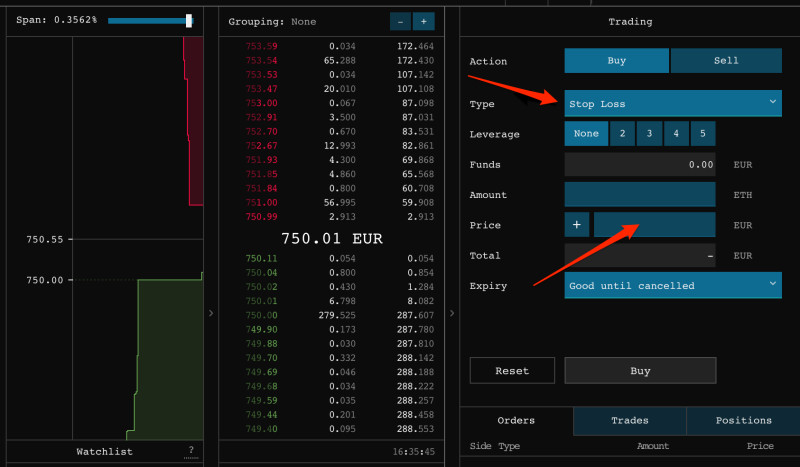
Kraken later enabled advanced order types like stop loss and take profit after engine upgrades. Those trigger off traded price. A stop loss sell fires a market sell at or below stop. Handy on any venue you pick for fx crypto currency.
Is It Safe to Trade This Way
You might ask whether it’s safe to invest in cryptocurrency with these leveraged products. Safety depends on you. The exchange uses 2FA and cold storage, but leverage can wipe you. I never risk more than I can lose. No tool is safe if used dumb.
Regulation varies. US agencies split views; EU has MiCA; UK FCA banned retail crypto derivatives. Asia mixed. For fx crypto currency, know your jurisdiction. A crypto hedge fund may use perps for hedging, but retail must be careful with margin.
If you're a blockchain trader , this is familiar. If new, learn margin first. A a crypto dip in a bearish phase can hurt, but forex perps are about fiat pairs, less wild than BTC. Still, a 2% fx move at 50x ends you.
Safety checks before trading
- Enable 2FA and use cold storage for idle funds
- Know local rules on crypto derivatives
- Start with small size and low leverage
- Read funding rate and liquidation price
Picking the Right Exchange
When looking for the top crypto exchanges to use , I check liquidity and fees. Binance leads crypto derivatives share, but BitMEX pioneered perps. Kraken added advanced stop orders after engine upgrade. Look at what fits your pair list.
In the US, rules differ. You can trade crypto with leverage in the US only on compliant venues. I'm not naming the best crypto leverage trading platform in the USA , but compare leverage, security, product range. The favorite way to trade crypto for me is to start small on a known platform.
Use isolated margin. Watch funding. In a bearish crypto market , forex perps can still give steady moves. They track EUR/USD not BTC, so they don't crash with altcoins. That's a nice diversifier for a crypto-native person.
What I check on an exchange
- Safety: 2FA, cold storage, custody
- Liquidity: volume on fx perp pairs
- Fees: maker/taker and funding rate base
- Product range: perps, options, futures
- Leverage options: up to 100x but sane caps
Market indicators help too. Trend from moving averages, momentum from RSI, volatility from Bollinger Bands. Volume from OBV. These work on fx perps same as crypto. I keep it simple and just watch price and funding.
Weekend Trading Edge
The fx crypto currency market never sleeps. That’s a huge deal. Traditional forex closes ~120 hours a week. Crypto fx runs all 168. No Monday morning gap surprise. Price action is continuous, which protects stop-losses.
I remember reading about central bank emergencies on weekends. Legacy brokers locked out. With perps, you react. This continuous price action is the core benefit. But don’t trade drunk at 3am just because you can.
Just because it’s open doesn’t mean you trade sloppy. Keep stops. Liquidation doesn’t care about day of week. The edge is for planning, not for revenge trades.
No weekend gap. No Monday morning surprises.
For hedgers maintaining long-term fx exposure, 24/7 matters. Carry trade strategies avoid swap fees entirely. That’s a structural win for anyone using fx crypto currency to manage risk.
Advanced Orders and Tools
Advanced order types help on crypto exchanges. Stop loss and take profit trigger off traded price. On Kraken, after infra improvements, these became available. You pick type from dropdown and enter trigger price. This works for perps too if the venue supports it.
Partial close orders let you scale out. Margin trading lets you borrow funds. For fx crypto currency, I suggest a hard stop loss always. The market can move fast during news. A take profit locks gains so you don’t stare at screen all night.
Some treasuries use perps to hedge. A DAO can short perpetual with 2x leverage to make synthetic dollar. If price rises 50% they get liquidated, so they manage leverage. That’s advanced, but shows the tool’s range.
Order types to learn
- Limit order to name your price
- Market order to fill at best price
- Stop loss to cap downside
- Take profit to lock gains
Keeping Your Crypto FX Simple
I’ll wrap my notes by saying fx crypto currency is a tool, not a magic wand. Learn the funding rate. Use low leverage. Pick liquid pairs. That’s it. The zero swap fee and 24/7 access are real perks I value.
If you want to trade crypto with leverage in the US or forex, treat it like a skill. Practice on small size. The mechanism BitMEX built in 2016 now powers forex perps, and that's a solid bridge between TradFi and crypto.
The perpetual swap is the most liquid derivative instrument in crypto, accounting for over 75% of all crypto derivatives volume.
My plain advice: start with EUR/USD at 5x. Watch mark price. Set stop. Check funding every morning. Do that and fx crypto currency can be a calm addition to your trading, not a casino ticket.

Comments on “How to trade fx crypto currency without swap fees or broker hassle”
No comments yet. Be the first to share your thoughts.