

Hedge Fund Crypto Basics
I’ve been digging into how hedge fund crypto shops actually work. For the longest time, I assumed hedge funds were just for the Wall St. crowd. But crypto flipped that script. Now a doctor, a DAO, or a macro trader can run a fund that buys Bitcoin and other coins.
The term hedge fund crypto describes a pooled vehicle that uses skill to trade digital assets. Some are formal SEC-registered funds, others are loosely run DAOs. The goal is consistent: beat the market or at least harvest returns from volatility. I’ll walk through real examples from folks who shared their methods.
This isn’t a corporate briefing. It’s just me-someone who read a stack of reports and wanted to make hedge fund crypto plain. You’ll notice the phrase hedge fund crypto appearing naturally so search engines grasp the topic. But I care far more that you understand than about keyword stuffing.

How One Fund Moved From Stocks To Bitcoin
Dr. Jeffrey Ross founded Vailshire Capital Management and the Vailshire Partners hedge fund. He’s a board-certified interventional radiologist who stepped away from medicine after finishing training in 2008. He launched the fund in 2014 as a stock-picking, value-oriented health care and tech long-short fund. Roughly eight months later, he added separately managed accounts for IRAs and brokerage.
He got into crypto around 2015–2016, first buying Bitcoin in 2016. He rode the 2017 parabolic ramp-up, figured he was a genius, then sold Bitcoin to chase altcoins that crashed 90–95% in 2018. That stung, plus a hefty tax bill. By early 2019 he’d studied Bitcoin deeply and showed clients that a 1% Bitcoin slot added no extra volatility but improved performance. The hedge fund crypto allocation then crept from 0% to 1% to 5% to 10–20% for some.
Vailshire originally loved tech stocks. Ross is always hunting for the best risk-adjusted return. Crypto was a natural segue. He now focuses primarily on Bitcoin. The fund once lost 37% in a year ending mid-2022 because Grayscale Bitcoin Trust swung from premium to discount, yet still beat the S&P over longer stretches. It’s a reminder that even sharp funds miss timing.
Bitcoin Versus Other Crypto Assets
Ross puts Bitcoin in its own box. He calls it “simply better money”-decentralized, the opposite of Federal Reserve cash. Altcoins like Ethereum, Cardano, and Solana are tech platforms for smart contracts, gaming, and arts. He describes them as “venture capital technology awkwardly glued to the blockchain.” I chuckle, but it’s true.
Over recent years, competing proof-of-work coins like Bitcoin Cash, BSV, and Litecoin dropped 65% to 98% versus Bitcoin. SEC chair Gary Gensler sees Bitcoin as decentralized non-government money and most other cryptos as unregistered securities, often centralized around founders. Proof-of-stake tends to make the rich get richer.
Bitcoin’s monetary policy is knowable: 21 million max supply, new tranches every 10 minutes, last coins mined around 2140, then slightly deflationary. Altcoins are pure speculation; none are permanent, as names “go up and down like lighting a match” to zero. That’s why hedge fund crypto managers often keep Bitcoin at the core.
Bitcoin is simply better money, the antithesis of government fiat currency.
Fund Managers And Their Backgrounds
Beyond Ross, Arthur Hayes co-founded 100x and runs the Maelstrom fund style. He invested in Ethena, parent of the USDe stablecoin. He described being bullish then feeling a “pit in my stomach” similar to late 2021 before the crash. Maelstrom raised staked USDe to record levels, took profits on “shitcoin” positions, and stayed “bigly net long” with dry powder.
SquidDAO is a crypto-native hedge fund built in web3-a DAO on a mission to be a profitable crypto investment fund. At one point its treasury controlled about $42 million held entirely in crypto, mostly Ethereum, with Convex, four Bored Ape NFTs, and smaller positions. The treasury grows via NFT sales, staking yield, and bonding revenue.
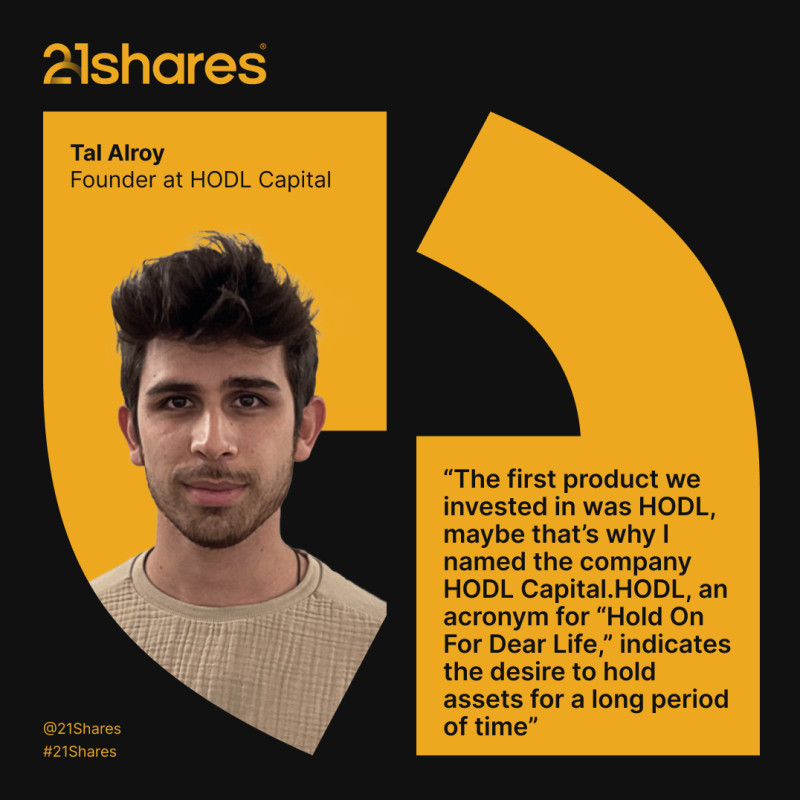
HODL Capital is an Israeli crypto fund founded by Tal Alroy, an early adopter. It navigated conversion complexities and regs, partnering with 21Shares for transparent access. The CAIA Association published a crypto data overview for fund CIOs-a dashboard for portfolio managers and allocators. All of this shows hedge fund crypto comes in many shapes.
Common Hedge Fund Crypto Strategies
Capital Fund Law Group outlined strategies from 2014 through 2019, noting more sophistication after the 2017–2018 surge. Fundamental and quantitative strategies include index or token-specific funds (early ones held BTC, ETH, LTC, XRP), long-only funds (bulk large caps, side-pockets for ICOs), algorithmic quant funds (small caps, exploit inefficiencies), and node funds (masternodes for passive income).
Maelstrom uses a probability approach. Hayes expected a 60% chance Bitcoin falls to $70k–75k then rises to $250k, and a 40% chance the bull continues. He reduced risk by “long-selling” Bitcoin and holding staked USDe at ~10–20% APY. He viewed a memecoin pump as a top signal. Expected value math favored risk reduction.
SquidDAO lets anyone buy in via bonding, forking NounsDAO and OlympusDAO. Governance runs through Squid NFT or locked veSQUID. Tools include website, docs, Discord, forum, Snapshot vote, Twitter, and Zapper view. This is a new kind of hedge fund crypto structure.
Main strategy types seen in hedge fund crypto
- Index or token-specific funds holding top coins
- Long-only funds with side pockets for high-risk tokens
- Algorithmic quant funds trading small caps
- Node funds earning passive income via collateral
- DAO treasury model with bonding and NFT governance
Portfolio Allocation Ideas From Funds
Ross recommends separating Bitcoin from crypto. For altcoins (pure speculation) allocation should be 0% or no more than 1–2% of net worth unless it’s “money to burn.” Bitcoin as savings: Vailshire clients started at 0% then moved to 1%, 5%, 10–20%, with some up to 50% based on comfort. He personally doesn’t recommend 100% Bitcoin but is fine with up to 50% for some.
CAIA’s rotational pattern: accumulate Bitcoin until BTC dominance dips (altseason), then increase ETH/BNB/SOL, then large-cap altcoins, then mid/small caps, then meme/micro caps for more risk. Risk ranking highest to lowest: presales/airdrops, meme coins, low caps, mid caps, large caps, Ethereum, Bitcoin.
CAIA example portfolios show ranges. Conservative by market cap: 50% BTC, 30% ETH, 20% alt large. Medium: 40% BTC, 20% ETH, 20% alt large, 10% alt mid, 10% alt small. Speculative: 10% BTC, 10% ETH, 20% alt large, 40% alt mid, 20% alt small. Sector versions mix SOL, L1, L2, staking, DeFi, and so on.
Example conservative portfolio by market cap
- 50% Bitcoin
- 30% Ethereum
- 20% large cap altcoins
- No small speculative bets
Risk ranking from high to low
- Presales and airdrops
- Meme coins
- Low cap tokens
- Mid cap tokens
- Large cap tokens
- Ethereum
- Bitcoin
Risk Management And Volatility
Crypto volatilities start at 100% per annum and can exceed 400% for specific tokens. Drawdowns, selloffs, and large volatility spikes are common. Macro hedge fund approaches must link global drivers to crypto because the two worlds correlate highly. Ross says Bitcoin is volatile but skewed to the upside; its Sharpe ratio is impressive. Volatility decreases as adoption grows.
In a bearish crypto market , Hayes reduces risk. He never shorts Bitcoin directly but shorts proxies like miners, Coinbase, and Grayscale Ethereum when expecting a drawdown. Ross uses “hold forever” core assets (Bitcoin, Apple, Amazon, Berkshire) and momentum trades (high beta crypto infra, MicroStrategy, miners). That’s a clear hedge fund crypto risk plan.
CAIA says the speed of correlation requires active management, not buy-and-hold. If you want to learn how to scalp trade crypto you need to watch these swings. Even a simple investor can copy the idea: keep some dry powder for dips.
I never short Bitcoin directly, but I short proxies when I expect a drawdown.
Market Cycles And Correlations
CAIA Bitcoin halving phases: pre-halving contraction avg 20–35% lasting 16–48 days; re-accumulation avg pullback 20% lasting 10–40 days; parabolic upward 300–500 days post-halving. Altcoin season phases: accumulation, resurgence (whales), lateralization, uptrend. Indicator: inverse correlation of BTC dominance vs price.
Dr. Ross: Bitcoin up big over five years vs USD, down 50% in a short-term inflation spike but a long-term hedge. He assigns 90% probability BTC hits $500k–$1M+ in 10–20 yrs, 9% flat, 1% zero. Hayes notes: Bitcoin is the only truly global free market, sensitive to global fiat liquidity. Its 30-day correlation with Nasdaq 100 is high and rising.
If stocks dump on a 10-yr yield rise, Bitcoin breaks down first as a leading indicator. He expects a 30% correction to $70–75k. That’s a key hedge fund crypto signal for macro traders. Watching these cycles helps regular folks avoid buying tops.

Macro Money Drivers Behind Crypto
The big macro picture drives hedge fund crypto. Hayes detailed that the US 10-yr treasury yield must rise to trigger a mini-crisis. The debt pile grew huge. Marginal treasury buyers are relative value hedge funds doing basis trades with repo leverage, endangered by bank rules. The Fed could suspend leverage ratio, stop QT, restart QE.
China’s central bank announced reflation, cut reserve ratio, bought bonds, then later ended bond buying and manipulated the yuan stronger, pausing reflation. Japan’s bank raised policy rate, balance sheet growth stalled, yen likely to appreciate, causing repatriation and asset sales. These cross-border flows hit crypto.
Stocks/bonds correlated in 1970s inflation, uncorrelated 2001–2021 growth, re-correlated 2021 inflation. Nasdaq 100 declines around 5% on a 10-yr yield. For a crypto fx lens view, these moves matter. A blockchain-native trader at a fund lives in this data. If you trade crypto with leverage in the us style, mind the macro.
Custody And Security Tips
Ross: exchanges are honeypots-he had assets frozen from a hack. He recommends cold storage on a USB, spread across locations like gold bars. 20% of all Bitcoin ever mined is lost. No CEO to call. SquidDAO treasury is visible via Zapper, with pseudonymous contributors for legal and meritocracy reasons.
SS&C Advent noted decimal precision: ETH 18 decimals, others 24, causing portfolio accounting workarounds. That may sound dull, but it’s real operational risk for hedge fund crypto shops. If you hold coins, use a wallet you control.
Security isn’t just tech. It’s process. Funds segregate staking from interest, automate accruals. Regular investors can learn: keep keys offline, write seed on paper, don’t brag online. That’s the simple takeaway.
Fees And Fund Governance
Traditional hedge funds charge “2 and 20” (2% AUM + 20% profits). Ross started at 1 and 20, then changed to 0% management fee + 20% incentive above a high watermark (must exceed prior year-end high to earn). Separately managed accounts charge 1% AUM under $1M, decreasing above. He calls 2&20 highway robbery given tens of thousands of funds can’t outperform the index.
SquidDAO governance via NFT or locked veSQUID; voting on Snapshot. No formal management fees described, but bonding revenue goes to treasury. Community is the “moat.” For regular folks, understand fee drag before joining any fund.
Crypto-Native DAOs As Funds
SquidDAO exemplifies a crypto-native hedge fund in web3: treasury grows, returns distributed via token value. Products: NFTs, tokens, returns. Success measured against holding/staking ETH. Community is the moat. Anyone can participate via tokens, but understand the mechanics.
This model flips old hedge fund crypto on its head. No gatekeeper, no accredited-only. But you vote with locked tokens. The best us crypto leverage platform is irrelevant; it’s about ownership and governance. I like the openness but warn: DAOs can be messy.
HODL Capital shows another path: an Israeli fund partnered with 21Shares for transparent, secure access. So the space has both old and new models. Study both before you pick.
Tax And Regulation Notes
Ross: crypto was Wild West, rug pulls, scammers. SEC considers altcoins unregistered securities, going after exchanges; stablecoins like Luna/UST lost peg. IRS treats Bitcoin as property, taxable event per transaction; predicts relabel as currency within 10 yrs, eliminating tax events. Wash-sale rule currently does not apply to crypto.
After the FTX/Alameda blowup, CoinDesk revealed the balance sheet, bank run, and bankruptcy. An SEC bulletin required banks to put custodied crypto on balance sheet as liability, raising capital needs and deterring custody. Criticisms say the modification could incentivize US exchanges. Coinbase CEO says FTX evaded regs.
Alternatives: Binance SAFU $1B self-insurance, Bitstamp Lloyd’s crime insurance. SS&C Advent noted staking tax unclear, need automated accruals. If you learn how to scalp trade crypto you still owe taxes on each trade. Keep records.
Operational Hurdles Like Decimal Precision
SS&C Advent hosted a focus group on digital assets. Topics: decimal precision (ETH 18, others 24, normalization issues), innovation in yield farming, tokenization (NFTs for art, music, real estate, club), staking (segregate from interest/dividend, unclear tax, automate accruals).
A blockchain-native trader at a fund needs good software for this. The CME group crypto futures may simplify some accounting but not all. If you wonder what the best crypto to buy is , Bitcoin’s clean supply helps. Also which crypto to buy in 2026 thought leads to the same answer for many funds.
Takeaways For Regular Investors
Ross: distinguish Bitcoin from crypto; consider Bitcoin as savings/hedge to fiat; get off 0% to 1% allocation; traditional 60/40 may fail in stagflation; study a few hours. He notes the Lightning Network may enable retail Bitcoin payments at stores via Strike. Host Jim Dahle remains skeptical: 12 years on, not using as currency, but acknowledges cross-border use case.
CAIA: crypto is a different asset class, active rotational management needed, volatility high, do your own research. Hayes: manage expected value, hold dry powder, staked stablecoins yield. Capital Fund Law: manager sophistication required; strategies evolved from index to quant/node. SS&C Advent: operational preparedness for decimal precision, staking, NFT accounting.
SquidDAO: anyone can participate in a crypto fund via tokens, but understand mechanics. If you’re looking for which crypto to buy in 2026 , the fund playbook points to Bitcoin first. A CME group crypto product might suit big players, but regular folks can just hold coins. That’s the hedge fund crypto lesson I took.
Simple takeaways you can use
- Separate Bitcoin from altcoins in your mind and portfolio
- Start with a small Bitcoin slot, maybe 1% to 5%
- Keep coins in cold storage, not on exchanges
- Watch macro signals like treasury yields and liquidity
- Consider staked stablecoins for yield but know the risk
Get off 0% to 1% allocation, consider Bitcoin as savings.


Comments on “Hedge Fund Crypto Strategies: How They Genuinely Work for Regular Investors”
No comments yet. Be the first to share your thoughts.