
Coinbase App Downloads as a Signal
Back in early 2021, Anthony Pompliano wrote about Robinhood and Coinbase seeing record mobile downloads. He called app downloads one of the best ways to measure which trading platforms were winning relative to their peers, while noting the numbers did not give a full picture. The available data did not include January totals, but the broader point stuck: downloads are a rough signal, not a verdict.
That same year, cryptocurrency in robinhood and Coinbase were flying up the charts as new users rushed in during market chaos. Pompliano framed the surge as a competition for attention, where a spike in installs meant real interest but not necessarily long-term retention. The later Base app materials shift the conversation away from raw download counts toward a product that folds wallet, identity, payments, trading, social tools, mini apps, and earning into one place.
The Base app, formerly Coinbase Wallet, is pitched as an alternative to downloading the Coinbase app, though separate rollout posts still use direct download language. For someone tracking coinbase app downloads today, the story is no longer just about install numbers. It is about whether one app can replace the stack of tools most crypto users juggles.
Everything onchain is now in one app. No downloads or switching tabs or apps just to share something fun.
From Coinbase Wallet to the Base App
At its A New Day One event, Base introduced the app as an "everything app" for creating, earning, trading, discovering apps, and chatting with friends. The goal was to pull social features, apps, payments, trading, identity, and onchain earning into one place instead of making users hop between services.
The product is built on open protocols. Users can manage assets, publish posts, connect with others, trade, send payments, use mini apps, and earn directly from their work and content. The positioning says you can enter the onchain ecosystem without downloading the Coinbase app or switching between exchange, wallet, trading, and payment tools.
The Base project started with a simple aim: transactions under one second and costs under one cent. The Base app extends those goals to a broader product that mixes global money movement with social and financial tools. Signing up also creates a Base Account, designed to work across apps and chains, with Base Pay added as a USDC checkout layer.
What the Base app packs into one experience
- Social feed and chat
- Trading with integrated flows
- USDC payments and Base Pay
- Mini apps running inside the feed
- Creator coins and earning tools
- Portable onchain identity
- Tokenized, tradeable posts
Download Language versus No-Download Claims
The supplied announcements use both no-download and download language, which can confuse people. One statement says no downloads or tab switching are needed to share something fun, and that applies mostly to mini apps running inside the feed. A separate global launch post says the app is available in more than 140 countries and ends with "Download the Base App today."
The distinction is about scope, not contradiction. The Base app is presented as a replacement for downloading the Coinbase app. Mini apps in the feed need no separate install. The rollout post describes downloading the Base app itself. The materials do not name a specific store, operating system, or direct link.
The first release was a beta for waitlist users at base.app. The later announcement said the app was available in 140-plus countries, but features may still vary by region. If you are searching for coinbase app downloads, check that you are getting the right product, since the Base app and the Coinbase app are separate things.

The New Base Stack
Base is described as moving from a chain to an open stack for builders, creators, businesses, and users. The stack has three connected parts: Base Chain, Base Build, and the Base app.
Three parts of the Base stack
- Base Chain - an Ethereum Layer 2 on the Superchain, built for fast, low-cost transactions
- Base Build - developer tools and a mini app dashboard for building, growing, and monetizing
- Base App - the consumer-facing home for content, trading, payments, identity, and apps
At the A New Day One event, Base announced the mainnet launch of Flashblocks, which cut effective block time from two seconds to 200 milliseconds, making Base Chain ten times faster. Base Build continues to support developers through resources at base.org/build, with a dashboard for managing mini apps. The Base app is the consumer side, positioned as an onchain home where users can create, earn, trade, discover, send payments, chat, and manage a portable identity.
An Open Social Network
The shift from coinbase and wallet to the Base app turns a crypto wallet into a social application. The announcement contrasts this with centralized platforms where one company controls user data and captures most of the value created by users and creators.
The Base app feed runs on Farcaster, and creator coins use Zora. The model gives users more control over identity and content, with creators earning directly from what they publish. Users can own their posts, earn from activity, control their feed and profile, turn posts into tradeable coins, carry identity across apps, and accept tips without relying only on ads, merchandise, or brand deals.
For the first time, designers, PMs, engineers can all speak in the same language, in the same location, in Figma.
Earning From Posts
Every post in the Base app is described as a coin that can be bought, powered by Zora. Creators do not need a minimum follower count, a brand deal, or a geographic threshold to start earning. A later announcement says creators can receive a share of transaction fees immediately when people trade their content, which contrasts with traditional social networks where income depends on ad reach or delayed payouts.
The model works like this: a user publishes a post, the post becomes a tokenized tradeable asset, others buy or collect it, and the creator gets value. Earnings flow to the creator's wallet. A beta announcement also offered weekly rewards to top creators, though those were limited-time and subject to terms.
Creator Coins and Portable Content
Creator coins are a way to monetize work directly instead of relying only on ads, merchandise, or brand deals. The idea is that when a creator succeeds and community members trade the associated asset, the community shares in the upside. Base also partnered with Repurpose.io so creators can bring content from other social platforms into the Base app automatically.
Users control their Base social profile, can apply themes, and carry the profile to other apps. This is part of the push to make identity and content portable rather than locked to one platform.
Trading Inside the Social Feed
The Base app treats trading as part of the social experience instead of a separate destination. Users can see what friends are buying, collect, or swapping, and enter a trade from the feed. Features include copying network moves, quick-buy amounts, double-tap to buy a preset amount, discovering tokens from posts, trade notifications, trending sort by market cap or volume, and trading without leaving the feed.
Assets available through the app
- Bitcoin
- Solana-based tokens
- Tokenized equities
- Perpetual futures
- Posts and creator coins
- Community tokens
- Other open-market assets
The app is described as a place to buy, sell, and swap millions of onchain coins with integrated flows. Base aims to cut the complexity tied to traditional exchanges. Users keep control of their crypto and keys, though third-party assets carry their own terms and risks.
Mini Apps and Onchain Games
Mini apps run inside the Base feed, pinned as favorites or discovered via trending lists. Hundreds were available at launch, covering games, yield tools, prediction markets, content, and social tools. The key point: these do not require separate installs or tab switching.
Notable in-feed mini apps
- REMIX - play, create, and share games with AI tools, no coding needed
- NOICE - auto tipping for creators on likes, follows, comments, reposts
- Decentralized Pictures - onchain cinema with trailers, remixing, tokenizing
- DeFi and yield apps - staking, lending, prediction markets
Encrypted Chat and AI Agents
Chat is powered by XMTP, with private end-to-end encrypted spaces. Users can share apps, send money, and interact with AI agents inside messaging. Group chats let you share content, send USDC, and build communities.
USDC transfers in chat are described as instant with no fees. AI agents like Bankr and Mamo integrate directly with messages for trades, payments, and portfolio checks. A separate announcement repeats that people can share trades, send crypto, and work with agents through encrypted DMs, though third-party agent use is subject to their own terms.
Sending USDC
The Base app supports USDC transfers on Base, with NFC tap-to-pay for in-person sends. Transfers complete in seconds, arrive immediately, and carry no fee. USDC works for peer-to-peer sends, NFC payments, chat payments, Base Pay checkout, and activity across supported apps.
Base's original network goal was moving global money for less than one cent and under one second. The app brings those payment capabilities to a consumer interface. USDC is a circle stablecoin at the center of this payment layer, tying the social experience to real-money movement.
Base Pay and USDC Checkout
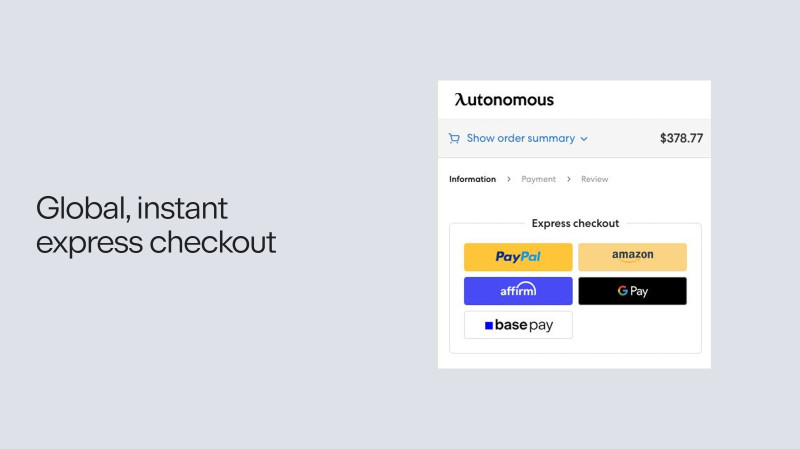
Base Pay is an express checkout for USDC, built for fast, low-cost, borderless commerce. Users save name, shipping address, and email once to a Base Account, then check out in seconds at supported merchants.
Base partnered with Shopify to bring USDC payments to millions of merchants worldwide. Base Pay became an option for Shopify stores, with tests at places like Erewhon's online shop. In the US, Shopify planned 1% cash back on USDC payments, available later in the year at no cost to the merchant. Merchants are auto-cashed out in local currency, avoiding foreign-exchange fees.
Base Account as Portable Identity
Base Account is the identity layer, described as a universal sign-in for the open web and an evolution of Coinbase Wallet smart-wallet tech. Signing up for the app auto-creates an account designed to work across apps and chains, expand over time, and follow the user through the onchain ecosystem.
Users sign in with Base, own the account, and carry it across apps. Developers can add "Sign in with Base" to their own apps. The identity layer is separate from the social feed, so the same account handles sign-in, assets, and payments without needing a Coinbase exchange login for every onchain action.
USDC Rewards and Earning Programs
The supplied materials cite two USDC reward rates: 4.1% APY in one announcement and 3.35% APY in another. Both are retained because they appear in different rollout materials. The rate is not fixed across sources.
The 4.1% APY program says the rate can change, Coinbase may adjust it, the current rate shows in-app, rewards roll out in the US only, and EU and Canada are excluded. US users must link a Coinbase account. The 3.35% APY notice says rates vary by region. Both state rates may change. Other earning paths include creator rewards, transaction-fee sharing, games, DeFi, creator coins, and social activity.

Availability and Risk Disclosures
Coinbase stated the reward products are not a securities offering and buying them is not like a securities investment. Qualifications include: rates may change, not all features are in every region, EU and Canada lack access to the 4.1% APY program, US users must link a Coinbase account, some features may not be available, third parties provide some services, and product plans can change without notice.
The content is educational, not financial or legal advice, and not an offer to buy or sell securities. The Base app provides third-party access as a convenience, with no warrant or responsibility for their content or services. Transactions with third parties may not be Coinbase transactions, even when accessed through the app.
Coinbase Wallet Solutions for Simpler Onchain Onboarding
On February 29, 2024, Will Robinson and Max Branzburg published "Evolving Wallets to Bring a Billion Users Onchain." Coinbase outlined two wallet solutions to remove onboarding friction.
The source names three barriers: seed phrases, transaction signing, and gas fees. The goal was letting developers build faster, simpler onboarding for new onchain users. The two proposals: a portable Smart Wallet from Coinbase Wallet, and embedded app-specific wallets via Wallet as a Service.
Smart Wallet by Coinbase Wallet
- Created with a passkey, no app download, no browser extension, no seed phrase
- Free, self-custodial, portable across apps
- Works with dapps using the Coinbase Wallet SDK
- Compatible with hundreds to thousands of EVM dapps
- Launched first on Base Sepolia testnet
Planned mainnet features include top EVM chains, passkey recovery, gas sponsorship on Base, and Account Abstraction Kit integration. Developers access both the Smart Wallet and the existing Coinbase Wallet mobile app and extension through the SDK.
Embedded Wallets Powered by WaaS
Coinbase Wallet as a Service, or WaaS, is for developers who want a wallet embedded in their own app. Onboarding uses email, social login, or app-specific accounts, so a user can go onchain without learning seed phrases, gas, or transaction signing. Signup can take seconds.
Embedded wallets are white-labeled and app-specific, with developers controlling the experience from onboarding through transactions. The wallet is non-custodial and user-controlled, with key export always available. Security is backed by Coinbase infrastructure, and browser-based WaaS wallets support all EVM networks including Base.
Lyra used embedded wallets to onboard users with email and Google accounts. Cymbal ran a week-long giveaway where users entered without paying gas, linked an X account, verified a phone number, and got a ticket. Coinbase invited developers to request early access and share feedback.
ETHDenver 2024 Demonstrations
Coinbase planned demos at ETHDenver 2024 at Home Base: Embedded Wallets on February 29 at 11 a.m. Mountain Time, and Smart Wallet SDK on March 1 at 10 a.m. Mountain Time. The goal was collecting developer feedback on easier, faster, safer onboarding. Base and its ecosystem offered gas credits, grants, and resources for onchain apps.
Key People Behind the Work
Will Robinson was Coinbase VP of Engineering, leading the developer product suite. Before Coinbase he was CTO at ASAPP, spent nearly 13 years at Google including running the Chicago engineering team and serving as CTO of Chronical, an Alphabet cybersecurity company. He holds bachelor's and master's degrees in computer science from Stanford.
Max Branzburg was Coinbase VP of Product, overseeing consumer product development. He co-founded Google Pay India with more than 100 million active users and worked on Google Cloud, YouTube, and Google X moonshots including robotics and drones. He earned a BA from Princeton.
Coinbase Insider-Access Security Case
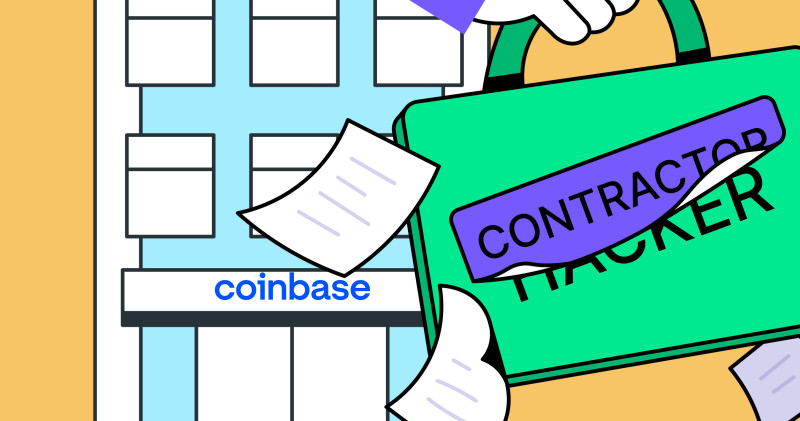
A LayerX article by Or Eshed on May 29, 2025 examined a Coinbase insider-access incident. The attack came through customer-support channels, not malicious app downloads or external exploits. Offshore contractors had access to internal SaaS tools, and attackers bribed overseas support staff to hand over sensitive customer data.
The exposed information included names, addresses, phone numbers, emails, partial Social Security numbers, and government ID images. Attackers demanded a $20 million ransom and threatened to leak the data. The incident affected nearly 97,000 Coinbase users.
The article frames this as a modern security gap where authorized users cause harm without breaking firewalls. The real perimeter now includes employees, contractors, freelancers, outsourced teams, third-party vendors, remote workers, and personal devices. Many SaaS platforms lack native controls to detect risky behavior after a legitimate login.
Coinbase Open Design and Mainstreaming History
A December 2018 Figma article by Morgan Kennedy documented Coinbase's design approach when the company had more than 20 million users. The piece compared crypto's growth to the Internet's effect on information, arguing an open financial system could expand access to services.
Coinbase's design team used four principles: guide, empower, humanize, simplify. Connie Yang, director of design, said the need was for more people who could make technical ideas accessible to all. Before Figma, the team used separate tools for design, prototyping, and handoff, which caused version-control issues and slow feedback.
Senior designer Zach Krassner introduced Figma, and the shared browser space let designers, PMs, engineers, and leadership access files, review work, add input, and track changes in one place. Krassner called it "like a designer's dream." The team ran informal "jam sessions" for quick collaborative design work, and the centralized workflow made them faster and more aligned.
The 2018 design principles and open-collaboration process preceded the later Smart Wallet, Base Account, embedded-wallet, and integrated Base app work. Both periods share the same thread: reducing crypto complexity through onboarding, familiar interfaces, portable identity, and fewer steps between a user and an onchain app.
Easy Digital Downloads Coinbase Gateway
A separate page titled "Easy Digital Downloads Coinbase Payment Gateway" described a free plugin with advanced features, but the supplied body contained only a WordPress critical-error notice. No compatibility details, feature descriptions, publisher info, technical requirements, or download destination were provided. It did not offer usable information about the Coinbase app, Coinbase Wallet, or the Base app.
How This All Connects for Users
For someone wondering how can i buy crypto currency or how do you buy crypto currency, the Base app tries to collapse the usual steps into one flow. Instead of moving between a crypto currency exchange app, a wallet, a trading desk, and a payment tool, the app stacks social, trading, payments, and identity into a single experience.
The no-download angle matters if you are tired of installing separate crypto apps for every function. The trade-off is that you are still relying on one company's stack, and some features are region-locked or third-party powered. If you compare this setup to binance wallets or robinhood for crypto, the Base app aims to sit somewhere between a full exchange and a social layer, with USDC as the common payment rail.
The broader product family also includes Base Pay, a checkout system designed for USDC payments.
Final Context
Coinbase app downloads used to be a simple metric: more installs meant more users. The Base app story is more layered. The product folds wallet access, identity, payments, trading, social tools, mini apps, and earning into one place, and it is pitched as a way into onchain life without downloading the Coinbase app. At the same time, separate rollout posts do ask people to download the Base app itself.
The stack approach - Base Chain, Base Build, Base App - tries to give builders a low-cost fast network, developers tools and a dashboard, and users a single consumer entry point. Whether that holds up depends on execution, regional availability, and how much control users want over their identity and assets.


Comments on “Getting Started With the Base App Without Coinbase App Downloads”
No comments yet. Be the first to share your thoughts.