
What Crypto Currency Lists Actually Do
I've been staring at crypto currency lists for a while now, and the thing that hits you first is how noisy the market is. Thousands of tickers, hundreds of token types, and everyone claiming theirs is the one to watch. A good list cuts through that noise by separating assets that differ fundamentally in their rights, utility, network role, backing, economic model, and availability on exchanges or apps. The F5 Crypto Fund breaks these down into store-of-value assets, layer-1 and layer-2 tokens, blockchain business tokens, stablecoins, tokenized reserve assets, and collectibles. CoinMarketCap lists more than 10,000 traded crypto assets, so a good list is basically your first line of defense against confusion. Other lists organize assets by exchange, investment style, trading application, blockchain use, or educational topic. Whether you're a beginner or just lazy about research, a solid list saves you from making dumb mistakes.
Store-of-Value Assets and the Top Cryptocurrency
When people talk about the top cryptocurrency, they usually mean Bitcoin. It launched in 2009 and was the first public blockchain. Bitcoins don't generate dividends or fees, but they give you strong property rights - only the owner with the private key can move them. The article argues Bitcoin could eventually exceed gold's market cap as a digital store of value. At one point its market-cap equivalence hit around €830,000 per bitcoin. Gold gets used as the comparison because it also produces no cash flow and serves mainly as a store of value. The article says no company or government can move, freeze, or seize bitcoins without the private key. On that basis, it characterizes Bitcoin as an ultimate store of value. Since its launch, Bitcoin has repeatedly reached new price highs.
Bitcoin ist digitales Gold – F5 Crypto Blog Post from 2018, Paul Otto, F5 Crypto Chief Investment Officer
The article argues that if Bitcoin continues to rise, its market capitalization as a digital, globally accessible store of value could eventually exceed that of gold. This is the core thesis: Bitcoin is digital gold, and the market cap comparison is the metric that matters. Gold has served as a store of value for centuries, and Bitcoin is trying to do the same thing in digital form. The difference is Bitcoin is divisible, portable, and borderless in a way physical gold never could be. I find it interesting that the article uses gold as the benchmark - it's an old-school comparison that makes the digital angle click for people who don't usually follow crypto.
Ethereum and Layer-1 Tokens
Ether, Ethereum's native token, has property rights almost as strong as Bitcoin's. The F5 Crypto Fund assumes one leading global store-of-value asset will capture most of that market, and so far that's Bitcoin. Ether's price rests partly on store-of-value narrative but more heavily on expected future cash flows. Ethereum processes stablecoin transfers, token loans, and token swaps. Each transaction pays a small network fee in ether, and stakers get a share. Solana uses its native SOL token and processes a high volume of transactions, with fees distributed to stakers too. The F5 Crypto Fund participates in the staking yields associated with ether and Solana through corresponding liquid staking tokens held in its portfolio.
The ether valuation footnote is worth understanding. When ether falls, transactions become cheaper and more transactions are executed until the gas limit is reached. Transactions then compete for inclusion, raising execution costs. Higher costs increase the yield available to stakers in the reference currency and, in turn, support the price of ether. Transaction numbers and transaction costs reach an equilibrium that determines ether's price. The article describes that equilibrium as proportional to the economic output behind the transactions. More activity on a layer-1 blockchain that involves transaction fees and staking produces a higher fair price. It's a feedback loop that's hard to see until you map it out.
Layer-2 Networks: Cheaper and Faster
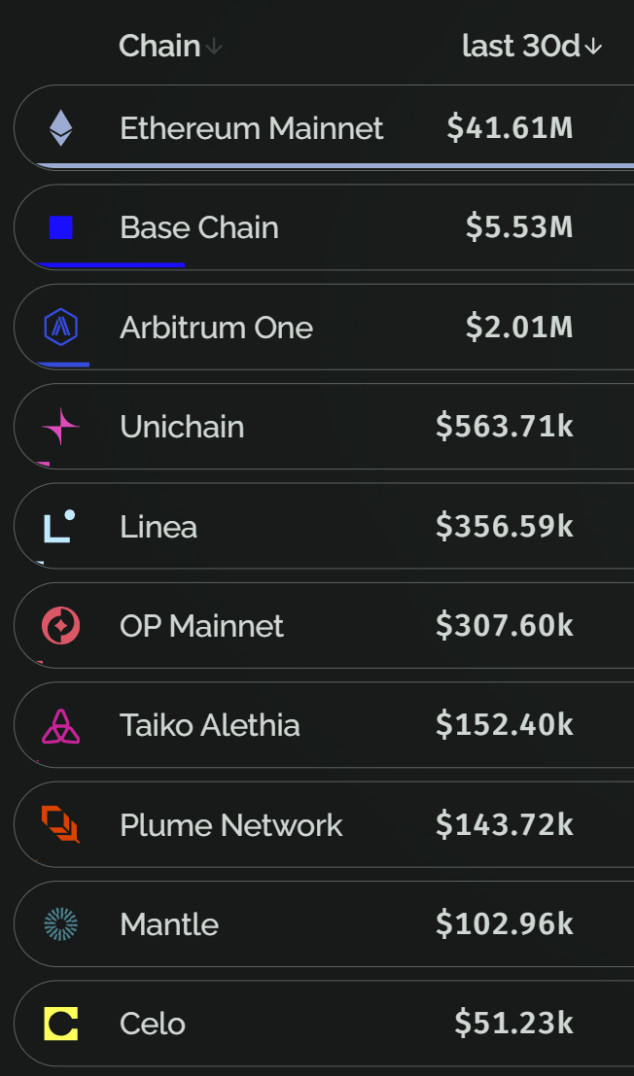
For most users, a layer-2 blockchain is hard to distinguish from its host layer-1. It uses layer-1 security while operating independently. Layer-2 networks are generally cheaper and faster and are often specialized for a particular application. Celo, for example, focuses on stablecoin transfers. Arbitrum, an Ethereum layer-2, issues ARB tokens. Compared with layer-1 tokens, layer-2 tokens have an even weaker claim to being stores of value because many compete in the same category and offer weaker property-right guarantees. Their valuations therefore depend mainly on network activity and transaction fees. A growthepie comparison showed Arbitrum generated about $2 million in user fees over 30 days while paying roughly $30,000 in "rent" to Ethereum. The article calls that a highly profitable business model. ARB tokens weren't directly tied to those profits at the time - revenue flowed to the sequencer controlled by ARB holders. The article expects direct participation in revenue generation to become a more prominent issue after the network's current emphasis on growth. The F5 Crypto Fund was monitoring layer-2 networks but did not hold layer-2 tokens at that time.
Blockchain Business Tokens and Lending Protocols
Since Bitcoin began, it processed about €8 trillion in transaction volume. About 120 million stablecoin transactions were being carried out each month with a combined value of roughly €800 billion. Uniswap handles between €1 billion and €2 billion per day. Blockchain protocols that provide stablecoins, trading, lending, or other services collect fees. These fees are available to the protocol in a manner similar to revenue at a conventional company and can be used to fund growth or distribute returns to token holders. AAVE is a lending protocol example - you deposit bitcoin worth €10,000, borrow €5,000, pay interest, and that interest becomes protocol revenue. The deposit gives the user additional liquidity. To reclaim the bitcoin, the borrower must repay the €5,000 plus accrued interest. The article says this process requires no bank account, eliminates conventional loan-approval processing time, and carries no third-party risk because the protocol operates independently on the blockchain.
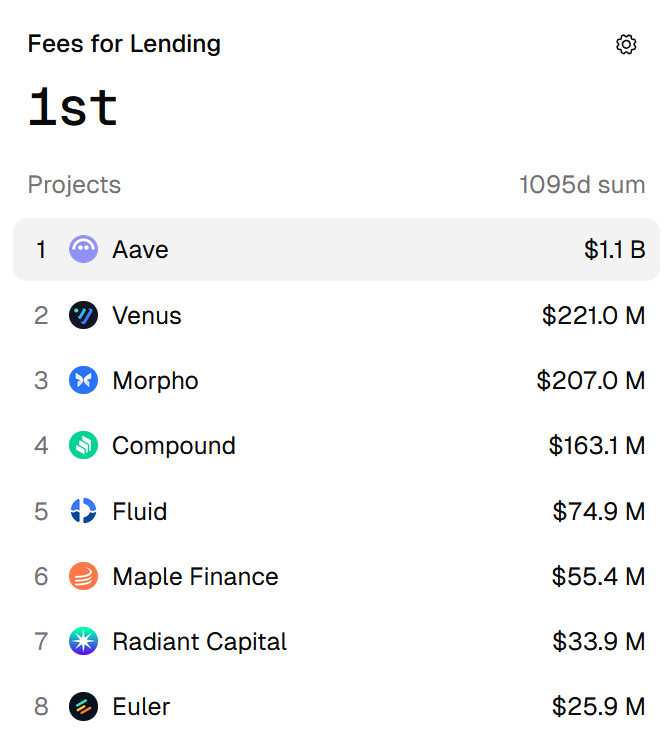
Successful public-blockchain protocols can generate substantial cash flows. The article says they often have a moat built around liquidity and can operate with virtually no expenses. It describes their growth potential as enormous and states that some may be attractively valued. The F5 Crypto Fund focuses on protocols with strong expected future cash flows and states that these cash flows carry the possibility of extreme returns. The protocol-expense footnote states that blockchain protocols are software and therefore do not have conventional offices or employees. Some protocols pay grants or salaries to developers or protocol stewards, while others operate entirely on a voluntary basis. This is a stark contrast to traditional companies with payroll, offices, and management layers.
Collectibles and Community Tokens
Memecoins like DOGE and PEPE, NFT collections like Etherrocks and Bored Apes, virtual-land tokens like MANA and SAND - these are collectibles. Blockchain tokens are known for temporary price excesses, and these excesses occur particularly often with collectibles. Value fluctuates with market sentiment, which is hard to predict. People have always formed social groups around shared interests and themes. Online communities can become very large, and a memecoin or NFT collection can function as a shared group identity. The article compares this role to a football scarf and describes it as evidence that crypto has product-market fit in this category. The F5 Crypto Fund almost never takes a long-term position in collectibles. In a market with an attractive risk-reward profile, it may participate temporarily in a collectible's performance. If you're hunting for the best cryptocurrency to buy right now, collectibles probably aren't it - the F5 Fund barely touches them for the long haul.
best cryptocurrency to buy right nowThe article says these excesses occur particularly often with collectibles, and market sentiment is difficult to predict.
Stablecoins and Fiat-Backed Digital Sterling
Coinbase added support for Tokenised GBP (tGBP), a pound-backed stablecoin issued by the London-based FCA-registered firm BCP Technologies. The announcement gives users a way to hold and move digital sterling on Coinbase. The Bitcoin Foundation article describes Coinbase as the largest U.S. crypto exchange and characterizes the expansion as occurring while stablecoins were having their "iPhone moment." Starting April 22, users in the United Kingdom and other supported regions could buy and sell tGBP on Coinbase. The listing was Coinbase's first GBP-backed stablecoin alongside its existing stablecoin offerings. The British pound stablecoin market sat at about $30.9 million, with tGBP accounting for roughly $30.1 million - about 97.7%. The other pound stablecoins listed were Mento British Pound at approximately $549,000 and VNX British Pound at approximately $173,000. Most stablecoin liquidity stays in dollars, so a British user often converts pounds to a dollar stablecoin, moves it, then converts back. That adds steps and FX risk. tGBP aims to cut out those intermediate conversions. Coinbase described tGBP as fully collateralised by fiat and short-term zero coupon bonds issued by HM Treasury.
How These Assets Show Up on Exchanges and Apps
Coinbase launched stock trading directly on its crypto exchange platform. Users could buy, sell, and manage stocks and exchange-traded funds alongside crypto holdings on a 24/5 basis. Kraken announced tokenized equity perpetual futures contracts with regulated benchmarks on its derivatives venue. It also launched Flexline, a crypto-secured loan product designed to let traders obtain liquidity from existing digital-asset holdings without selling their positions. Matrixport listed PAXG, an ERC-20 digital asset on Ethereum that is fully backed one-for-one by physical gold reserves held in custody by Paxos Trust Company. Paxos Trust Company is regulated by the New York State Department of Financial Services. If you use a coin market cap app, you can track where these assets live across platforms. Each platform has its own flavor - some focus on trading, others on custody or lending.
coin market cap appPAXG was created to be divisible, fungible, portable, and easily obtainable. It is intended to avoid the limited transportability and high storage costs associated with physical gold. The token provides a way to own fractional, investment-grade physical gold in digital form and offers exposure to tokenized gold for portfolio diversification against potential cryptocurrency volatility. Each PAXG token is backed by one fine troy ounce represented in a 400-ounce London Good Delivery gold bar. The bars are stored in Brink's vaults approved by the London Bullion Market Association. The matching supply of PAXG tokens and underlying gold is attested every month, with the reports posted on Paxos's website. Matrixport described itself as a large digital-asset financial-services ecosystem working with early-stage Web3 companies. It reported managing $4 billion in digital assets and offered services including Cactus Custody, spot over-the-counter trading, fixed income, structured products such as Dual Currency, lending, and asset management.
Premade Lists and Market Scanning Tools
TrendSpider added cryptocurrency market scanning and premade crypto exchange and asset lists in a software update. The crypto scanner was designed for users comparing or trading altcoins across thousands of tickers. The post says users could apply cryptocurrency scanning to find a desired setup and scan markets on different exchanges. TrendSpider described the scanner as providing cryptocurrency functionality similar to the scanners then widely used by stock traders. Premade crypto lists were added to watchlists. They allowed scan results to be segmented by exchange or used to maintain a watchlist of possible arbitrage opportunities. The post states that users could open their watchlists and select the "crypto lists" option. All exchanges shown in the interface had been added under that category. If you want to list crypto coin options quickly, these premade lists save a ton of time.
list crypto coinPi Network and New Token Launches
Busha announced $PI, Pi Network's native cryptocurrency, was available for trading. Busha offered USDT/PI and KES/PI trading pairs. The announcement specifically stated that PI was not yet available in a Nigerian-naira trading pair. The listing shows how new tokens get exposure through exchange platforms. The article notes PI wasn't yet available in a Nigerian-naira trading pair, which matters for users in that region. Busha's crypto blog organizes material under Crypto News & Trends, Crypto Guide, Products, Campaigns/Events, Behind Busha, and Company Updates. Its tags include Announcement, Behind Busha, Busha Commerce, Busha Earn, Campaigns/Events, Company Updates, Compliance, Crypto Guide, Crypto News & Trends, People, and Products.
Tokenized Equities and New Asset Types
BitGo and Figure completed what they described as the first blockchain-native equity trades executed through integrated infrastructure for blockchain-native equities on Figure's alternative trading system. The announcement said the completed trades showed tokenized equities operating continuously on-chain without abandoning risk-management or regulatory standards. WisdomTree announced 24/7 trading and instant settlement for its Treasury Money Market Digital Fund, WTGXX. It described the launch as the first permission for registered tokenized mutual-fund shares to trade and settle instantly around the clock within the U.S. regulatory perimeter through a dealer-principal liquidity model. Tokenized equities operating on-chain without abandoning risk-management or regulatory standards - that's the direction these markets are heading. This opens up a new category beyond pure crypto assets. Coinbase launched stock trading directly on its crypto exchange platform. Users could buy, sell, and manage stocks and exchange-traded funds alongside crypto holdings on a 24/5 basis.
National Trust Charters and Stablecoin Infrastructure
Crypto.com's U.S. affiliate received conditional approval from the Office of the Comptroller of the Currency for its national trust charter application. The approval was described as clearing a major milestone toward providing custody, asset staking across blockchains and digital-asset protocols, and trade settlement. Payoneer filed an application for a U.S. national trust bank charter. The proposed bank would support stablecoin-enabled infrastructure for global businesses. Stablecore, a digital-asset core designed to let banks and credit unions offer stablecoins, tokenized deposits, and other digital-asset products, joined the Jack Henry Fintech Integration Network. The integration was described as giving access to Jack Henry's approximately 1,670 bank and credit-union core clients and more than 1,000 additional financial institutions. The goal was to allow those institutions to deploy compliant digital-asset products within their existing core systems. This is big for mainstream adoption.
OCC Proposed Implementation of the GENIUS Act
The OCC published a 376-page proposed rule intended to implement key provisions of the GENIUS Act. The rule addressed regulations the OCC was required to issue under the act other than matters involving the Bank Secrecy Act, Anti-Money Laundering, and Office of Foreign Assets Control sanctions. Those topics were assigned to a separate rulemaking coordinated with the Department of the Treasury. The proposed rule defined key terms, specified activities

Comments on “Compare Crypto Currency Lists and See How Token Types Differ”
No comments yet. Be the first to share your thoughts.