
Crypto Apps Compared: How to Choose One That Fits You
I have spent a lot of time looking at crypto apps. Some are built for storing and moving digital assets. Others mix in trading tools, fiat accounts, payments, social feeds, identity, mini apps, creator rewards, or developer infrastructure. The point is they are not all built for the same job. If you pick one without knowing what it actually does, you end up with a tool that fights your routine instead of fitting it.
Financial institutions and crypto companies keep pushing customers to digital platforms to save money and free up resources. Market research firm Mintel found that 65% of consumers used financial apps for payments or transfers. Liftoff expected that share to grow as younger, tech-oriented people entered the market. Liftoff also said digital apps and web platforms are the only way to manage and facilitate cryptocurrency payments. The growth of cryptocurrencies and the global crypto market has increased demand for specialist apps, with competing companies trying to offer better rates, privacy, and security.
What Crypto Apps Actually Do
The functions I see across the sources include asset custody, fiat accounts, crypto trading, portfolio tracking, payments, global payouts, identity, social networking, creator payments, mini-app distribution, rewards, advertising, analytics, and blockchain infrastructure. When comparing crypto apps, the sources emphasize several product attributes: supported assets, custody arrangements, ease of use, fees, security, backup and recovery options, alerts, historical or real-time reporting, fiat access, payment options, trading tools, social features, rewards, geographic availability, and regulatory requirements.
Smartphone access matters because cryptocurrency prices and portfolio balances can change fast. A mobile app gives you continuous access to investment data, alerts, transactions, prices, and market activity instead of locking you to a desktop computer. If you are looking for a wallet that lives on your phone , that constant access is a big reason to choose mobile over desktop.
The Base App: An Everything App Example
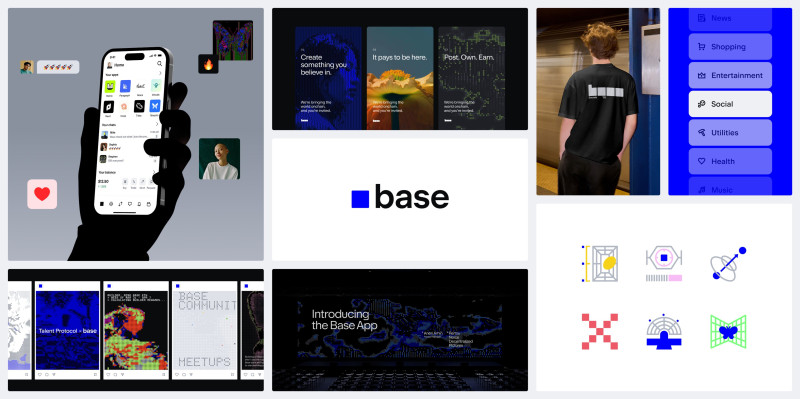
At the A New Day One event on July 16, 2025, Base introduced the Base app, formerly Coinbase Wallet, as an "everything app" for creating, earning, trading, discovering apps, and chatting with friends. A new user would also receive Base Account for onchain identity and Base Pay for checking out with USDC. Base was initially launched with the goal of making onchain participation simple and accessible, with transactions taking less than a second and costing less than a cent. It later expanded support for builders creating onchain applications.
The announcement divided Base into three connected parts. Base Chain is a secure, fast, low-cost Ethereum Layer 2 built on the Superchain. With the mainnet launch of Flashblocks, Base said it reduced effective block time from two seconds to 200 milliseconds, making the chain 10 times faster. Base Build is the builder ecosystem at base.org/build, with tools and support to help teams create onchain experiences. A new Base Build dashboard helps teams build, grow, and monetize mini apps. Base App is described as the user's home onchain, combining wallet functions, social networking, app discovery, payments, trading, and chat.
Social Features, Trading, and Creator Rewards
Coinbase Wallet was rebuilt as the Base app, moving beyond a standalone wallet. The app combines asset management, social posting, trading, payments, chat, and direct creator earnings. Users can manage assets, post, connect with others, trade, chat, and potentially receive rewards without leaving the application. The social feed is powered by Farcaster. Base's stated model is that creators own their content, can carry their identity and content across applications, and can earn directly from their work. Tips and direct payments can connect creators with their audiences without requiring a traditional brand deal.
The announced social features included methods for users to earn from their content, watch their network trade, and post and be rewarded. Every post becomes a coin that can be bought through Zora. Creators can earn without a follower minimum, brand deal, or geographic restriction. The network trading feature allows users to see what friends are buying and swapping, then join a trade without leaving the feed. New tokens can be discovered and traded in a few taps. For posting and rewards, top creators who post and engage with the community can earn weekly rewards for a limited time, subject to applicable terms. Payouts occur directly in the app, where creators can track earnings.
Every post becomes a coin that can be bought through Zora. Creators can earn without a follower minimum, brand deal, or geographic restriction.
Mini Apps, Payments, and Rewards
Mini apps operate inside the social feed, eliminating the need to install separate applications. Users can pin favorites, discover promoted apps, and view trending apps. Base said hundreds of mini apps were available on day one. Several mini apps were specifically mentioned. Remix allows users to play, create, and share games without installation or coding. AI tools can turn game ideas into playable experiences, and users can also play games created by others. Noice allows likes, follows, comments, and reposts to be configured to automatically tip creators onchain. Decentralized Pictures lets users watch and remix film trailers and coin them, with rewards directed to creators.
The app also featured capabilities for accessing coins, sending money, customizing profiles, and earning USDC rewards. Users can buy, sell, and swap millions of onchain coins through integrated transaction flows. Users hold their own keys and crypto assets. The platform enables sending or receiving USDC on Base through NFC tap-to-pay, allowing transfers in seconds and immediate access to the funds in the recipient's account. The application also supports sending and receiving USDC through chats without transaction fees. A customizable social space allows users to control their profile, apply themes, and carry the profile with them. The USDC rewards feature can be activated to earn up to 4.1% APY simply by holding USDC. The rate is variable and can change at Coinbase's discretion.
Chat, Community, and AI Agents
Base chat is powered by XMTP and is end-to-end encrypted. The application supports individual and group conversations, sharing social content, and sharing mini apps without leaving the main interface. The messaging features include capabilities for building communities, transacting with AI, sending funds, and maintaining privacy. Users can create group chats, manage conversations, and share social content. AI agents such as Bankr and Mamo can be integrated into messaging. According to the announcement, they can help users trade, send money, or balance a portfolio. Users can send or receive USDC instantly inside chats without transaction fees, while every conversation is designed to remain private through end-to-end encryption.
Base Account and Cross-App Identity
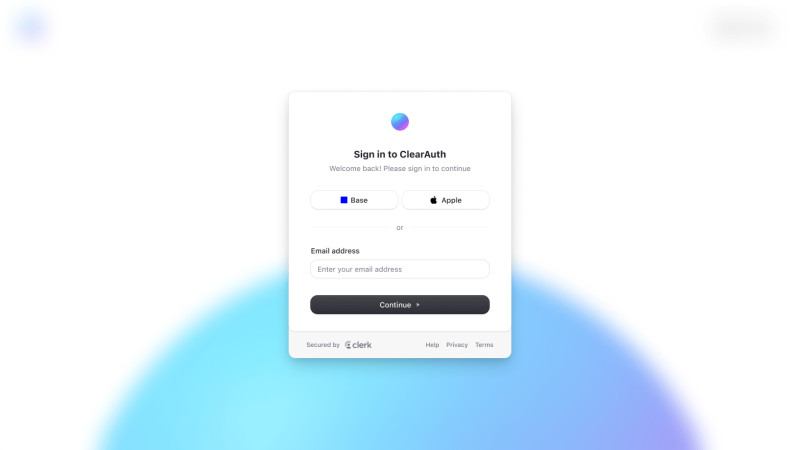
Base Account provides a universal identity for the onchain ecosystem, described as an evolved version of a smart wallet. It functions as a universal sign-in for the open internet. Signing up for the Base app automatically creates a Base Account. The account is designed to work across applications and chains, with future support planned for more platforms. Users can select "Sign in with Base," and their account details can follow them through the onchain ecosystem. They can manage the account in the Base app or through account.base.app. Once created, the account is intended to remain under the user's control across onchain applications. Developers can add "Sign in with Base" to their own applications.
Base Pay and Merchant Payments
Base Pay is an express checkout system for USDC. It is intended to make onchain commerce faster, less expensive, and borderless. Users can save their name, shipping address, and email in Base Account and check out in seconds wherever Base Pay is supported. Stripe and Shopify introduced a partnership intended to bring USDC payments on Base to millions of merchants. Base Pay became an available payment option for Shopify merchants when announced. The Erewhon online shop was cited as an early example. Shopify planned to provide customers in the United States with 1% cash back when paying with USDC, with the promotion expected later in 2025. The merchant would incur no direct cost for the customer cash back. Merchants would be automatically cashed out in their local currency without foreign-exchange or multi-currency fees. Base Pay is available to developers and merchants that want to accept USDC payments.
If you are wondering how to get started with USDC or where to buy crypto for payments, Base Pay integrates with the Base app so you can fund your account and checkout in one flow. The USDC stablecoin is the payment rail here, pegged to the US dollar.
Trading App Comparisons: A Historical Snapshot
A guest post published in 2018 presented several options for managing crypto investments. The apps were presented as a historical snapshot, with the page later updated on November 6, 2020. The article emphasized convenience, fees, reporting, asset coverage, alerts, custody, security, backups, and suitability for different trading styles. The counts and fee comparisons in this roundup reflect the 2018 publication date rather than a current comparison.
Trading apps from the 2018 roundup
- Coinbase - described as a good choice for someone new to crypto investment because it was easy to set up and use, with simple information display
- Gemini - another popular option with slightly lower fees than Coinbase at the time, intuitive interface, extensive reporting, and graphs
- Blockfolio - broad portfolio tracker for users holding many different cryptocurrencies across a diverse portfolio, tracking more than 800 cryptocurrencies with push notifications for price thresholds
- Investing.com Cryptocurrency - from a long-established financial information company, capable of tracking 1,300 cryptocurrencies in real time with historical data and price alerts
- Bitcoin Wallet from BTC - simple, efficient, secure, with reasonable transfer fees, backup system, and QR reader, but deals only with Bitcoin
- Xapo Wallet - strong emphasis on storage security, described by The Wall Street Journal as "the Fort Knox of cryptocurrency storage," with three security layers
- BitTrade Scalping Terminal - aimed at short-term traders interested in smaller price movements, clean interface, demo-trading option, browser-based access
The 2018 roundup described Coinbase as a good choice for someone new to crypto investment because it was easy to set up and use. At the time, the post said Coinbase had more than 10 million customers. If you are looking at Coinbase and its wallet products today, the lineup has expanded significantly since that snapshot. The number of people using the app has grown well beyond those early figures.
Additional Trading Products and Exchange Features
A 2024 Liftoff case study described Coinbase subscription benefits including zero trading fees, a 90-day free trial to an analytics platform, and exclusive tax benefits through a cryptocurrency calculator. Binance was described as using tournaments such as the Binance World Championship to test users' trading skills and compare returns. Liftoff also cited Binance's Red Packet feature, which allows users to send and receive cryptocurrency as gifts. If you have used Binance wallet features or their tournament system, you know how they try to keep people engaged through competition.
On March 26, 2025, Busha announced that PI, the native cryptocurrency of Pi Network, was available for trading. The supported trading pairs were USDT/PI and KES/PI, with Kenyan shillings available as a pairing. PI was not yet available for trading against the Nigerian naira. A Busha article about futures platforms stated that the global crypto market was projected to exceed $5 trillion in 2025. It described futures as a way for traders to hedge risk, speculate on price movements, and potentially maximize returns.
The global crypto market was projected to exceed $5 trillion in 2025. Futures are a way for traders to hedge risk, speculate on price movements, and potentially maximize returns.
Crypto Payment and Global Payout Apps
On April 22, 2022, Stripe announced cryptocurrency payouts through Connect. Stripe had built Connect to let businesses send payouts programmatically, and the service already supported local currencies in more than 70 countries. Stripe said geographic gaps remained because of the complexity of supporting different local payment systems. Stripe described cryptocurrency as a possible form of open-access global financial infrastructure, rather than focusing only on its store-of-value characteristics.
Twitter was the first platform selected for the crypto-payout pilot. Twitter already used Connect to pay creators for products including Ticketed Spaces and Super Follows. Under the announced model, creators who opted in could have earnings sent to a cryptocurrency wallet. Stripe handled the cryptocurrency acquisition, storage, transfer, and operational requirements. Existing platforms did not need to change their code and would not have to build those capabilities themselves. USDC was the first supported payout currency. It is a stablecoin pegged to the United States dollar. Payouts initially took place on the Polygon network, which Stripe selected for its low fees, speed, Ethereum integration, and broad wallet compatibility.
Compatible wallets named in the announcement included MetaMask, Coinbase Wallet, and Rainbow. Creators could hold a balance on Polygon or bridge it to Ethereum and exchange it for another currency. Stripe said it intended to add more networks and payout currencies over time. Stripe's Connect-based integration also covered the operational aspects of crypto payouts. Creators and freelancers went through Stripe's standard onboarding process, and Stripe performed comprehensive KYC checks. The onboarding flow was designed to adapt as cryptocurrency regulations changed. Through the Stripe Express app, users could manage account information, view earnings in real time, and check upcoming payouts.
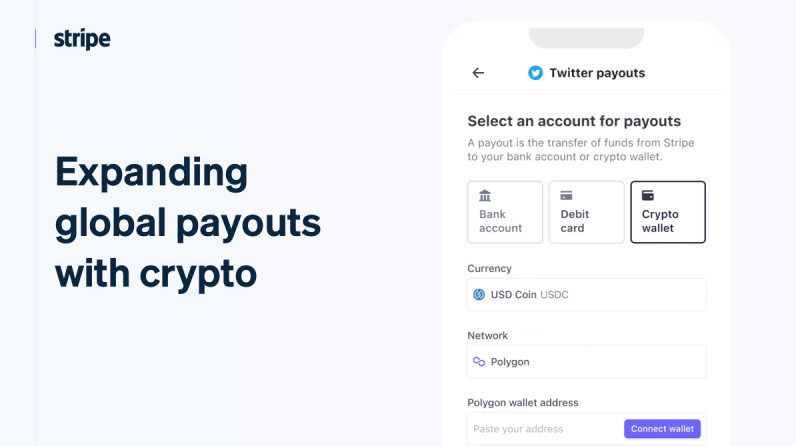
Stripe described crypto payouts as an extension of its Global Payments and Treasury Network, which it called GPTN. The company said it planned by the end of 2022 to support cryptocurrency payouts in more than 120 countries. Esther Crawford, Twitter's Product Lead for Creators, said Twitter is where people go to have conversations about what's happening, and they were focused on helping creators who drive those conversations earn money and connect with their audiences in new ways.
We're excited to begin offering crypto payouts to creators via Stripe so they have more choice in how they get paid.
User Motivation and Engagement in Finance and Crypto Apps
Liftoff's November 4, 2024 analysis examined how finance and crypto applications can use game mechanics to support engagement and monetization. Liftoff's Motivational Framework organizes users into seven primary elements and 14 motivational drivers. Financial efficiency motivated some users, while others prioritized safety and security when banking online. Additional motivations included financial education, self-improvement, social connection, status, and a desire to reach specific financial goals. Some crypto users were motivated by the ability to display financial or investment achievements associated with social status.
Liftoff identified three progression-related drivers common among finance and crypto users: learning and self-improvement, achieving milestones, and collecting and gathering. Task systems use daily challenges, onboarding tasks, and feature-exploration tasks to encourage users to return and make progress. Achievement systems connect progress to explicit milestones and give users a sense of reward or accomplishment. User levels and experience systems allow people to see advancement through an application. Even when a final achievement takes a long time, visible progress can provide an incentive to continue. Incentive-based education teaches complex finance or crypto topics while offering in-app rewards for participation. Log-in calendars reward users for opening an application on consecutive days, applying a common mobile-game mechanic to finance and crypto products. Liftoff described progression as a way to reduce churn. Visible advancement gives users a goal even when the final reward remains distant.
Social Engagement and Live Events
Liftoff identified four motivational factors connected with social engagement and live events: connection and empathy, social status and competition, excitement and entertainment, and emotional interaction. Social media feeds can combine market information with user communication. CoinMarketCap was cited as an example of a crypto app using a feed to present financial data while supporting discussion. Tournaments and leaderboards combine social status with competition. Users can compare results with other participants. Binance tournaments such as the Binance World Championship were described as encouraging users to demonstrate trading performance and compare returns. Groups let users communicate and coordinate financial activity. Venmo was cited as a non-crypto example where groups can communicate while distributing payments. Live events apply time limits and competitive elements to produce short periods of concentrated engagement.
Monetization Tied to User Motivation
Liftoff connected three specific motivation groups to monetization systems: connection and empathy, efficiency improvement, and personal safety and trust. Subscriptions were described as one of the most common finance and crypto monetization methods. A long benefit list can support loyalty and efficiency. Coinbase's subscription was cited as an example. Gifting combines social behavior and finance. Binance's Red Packet feature was described as a way to send and receive cryptocurrency gifts. Because finance and crypto are regulated sectors, engagement and monetization methods must follow applicable rules. Liftoff suggested turning required safety or investment education into gameplay mechanics. Examples included rewarding users who enable two-factor authentication or read safety features.
Onchain Advertising, Referrals, and Action-Based Monetization
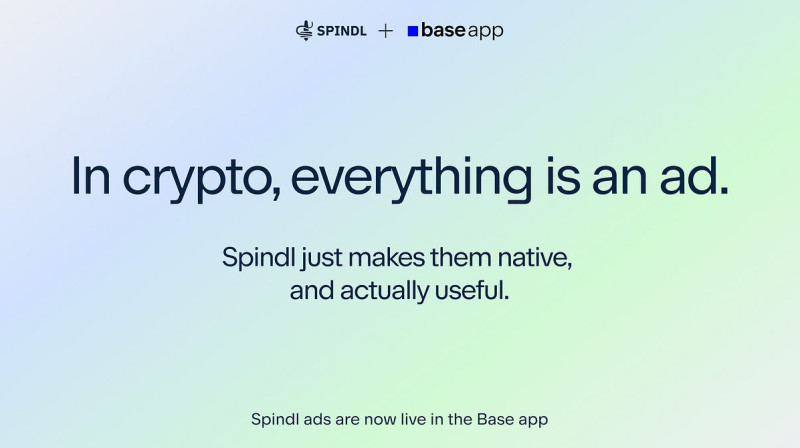
On July 30, 2025, Antonio García Martínez argued that crypto interfaces frequently function as advertising even when they are not labeled as advertisements. His definition covered more than conventional banner ads. The post opened with a quote from David Ogilvy's Ogilvy on Advertising (1983): "Advertising is salesmanship in print." The discussion about selling a wallet or exchange through Spindl ads was framed through a specific dialogue about how every clickable thing on an app's home screen is either a swap or NFT mint with a referral kickback.
The post's position was that crypto advertising extends beyond banners on news sites and chain scanners. It described these commercial mechanisms as part of the growth loops used by crypto applications. Well-integrated crypto ads were described as relevant native content inside an existing interface. The author argued that users may engage with sponsored content more than with non-sponsored content and that sponsored content can be more engaging than content labeled as organic.
Any piece of media, content, or user interface where the creator or developer earns a fee for having you do something onchain is an ad, full stop.
Under this definition, trading interfaces are dynamic advertising. Asset detail pages also function as advertising when a buy or swap button produces a fee or directs a user to a selected venue. Wallet routing is another example. Wallets can direct trades to one decentralized exchange or another while earning referral fees. Builder codes were described as another form of action-based advertising. An outside builder inserts a unique code into trades submitted through a third-party interface. According to Messari, outside builders had recently generated more than $10 million in revenue in the Hyperliquid ecosystem. Farcaster mini apps can be promoted as posts in Base app feeds and search results. The post cited Phantom as a market comparison, stating that the wallet generated more than $200 million annually from trading referral fees. The author added that Phantom did not run conventional ads.
Spindl Ads in Base App
Spindl launched advertising inside Base app, positioning it as an onchain "everything app" combining a social network, app discovery, chat, payments, and trading. Spindl connects advertisements to onchain actions and states that it charges only when defined value occurs. Builders can choose the success action, such as minting, swapping, staking, depositing, following, or another user action. The first feed units appeared in Base app's new social feed. They could promote existing Farcaster casts from builders seeking broader distribution. Advertisers could choose, manage, target, and measure these units through Spindl's analytics and audience-segmentation application. Campaign objectives could include clicks, Farcaster follows, swaps, deposits, or other onchain actions. Additional advertising units were planned for the Base app home page, where chats, videos, and mini apps also appear. Existing Spindl advertisers could extend the same format into Base app. The post warned that sponsored content and incentivized onchain actions involve risk and may not suit every user.
Core Components of a Crypto App
A basic crypto app can be organized around four connected components: onboarding, a cryptocurrency wallet, a fiat account, and a fiat-to-crypto exchange. These functions may exist as separate products or be integrated into one application. The product scope determines whether it also includes payments, trading, investment tools, identity, social functions, rewards, analytics, or developer services.
Digital banking software can provide account management, real-time transactions, budgeting tools, and personalized financial insights. Digital payment software can support fast and convenient transactions for individuals and businesses. Accounting software can automate invoicing, payroll, expense tracking, and financial reporting. Insurance applications can simplify policy management, claims processing, and customer interaction. Investment platforms can provide trading, portfolio management, and real-time market analysis. The cited development approach emphasized usable design, secure transactions, and configurable features for novice investors and experienced traders.
Security and Compliance
Security is described as an architectural requirement from the beginning of development rather than an addition made after launch. Suggested controls include secure architecture, encryption for data in transit and data at rest, and biometric authentication. Identity verification must support KYC and AML requirements, while security and compliance must be incorporated into quality-assurance testing. Products require data-integrity and privacy protection, as well as regulatory requirements matched to the business model, users, and operating environment. The development source described its engineering as ISO 27001-certified and GDPR-compliant, with certifications also listing ISO 9001:2015, ISO 27001:2013, and ISO 14001:2015.
Development Scope, Cost, and Timing
The cost of a fintech or crypto application depends on several factors. The final price is determined by the project's scope, the required integrations, and regulatory requirements. The source said it used a time-and-materials model and provided detailed estimates after discovery calls. Its general estimate for a compliant MVP was "a few months," depending on integrations and regulatory scope. It said an AI-native approach could accelerate parts of the process. A separate item described an "AI-Native Approach" to building an MVP in two to four weeks, while the general FAQ continued to state that a compliant MVP typically takes a few months. The two timeframes covered different scopes or conditions. Named fintech case studies included Cashli Funds, Banqup by Unifiedpost Group, Extra Karte by Novum Bank, Knightsbridge, and Everon.
Blockchain Infrastructure Used by Crypto Applications
Base Chain provides the network layer for applications in the Base ecosystem. The A New Day One announcement focused on Flashblocks and a reduction in effective block time from two seconds to 200 milliseconds. Base Build provides builder tools and support. Its dashboard was designed to help teams build, grow, and monetize mini apps. The broader Base model connects the chain, developer tools, and consumer application. This structure allows applications to use onchain transactions while users retain access to social, identity, payment, and trading features inside the Base app.
On May 5, 2026, Bitcoin Foundation reported that Upbit, operated by Dunamu, planned to build GIWA Chain, an Ethereum Layer 2 using Optimism's OP Stack. GIWA Chain was already live as a testnet, while mainnet remained planned. Under the announced arrangement, Upbit would run the primary sequencer and control network configuration. The Optimism Foundation would provide monitoring, engineering support, and a backup sequencer. The announcement positioned GIWA as another exchange-specific adoption of the OP Stack. It noted that Coinbase had used the OP Stack for Base, while Kraken had used it for Ink.
Reuters was cited as putting Upbit's share of South Korea's domestic crypto market at about 70% in late 2025. Dunamu was described as being valued at about $10.2 billion in Naver Financial's planned all-stock acquisition. CoinGecko data showed Upbit's share of centralized-exchange spot volume across several years: 12.2% in 2021, 6.9% in 2022, 8.5% in 2023, and 6.7% in 2024. CoinGecko's 2025 exchange report placed Upbit's market share among the ten largest centralized exchanges at 5.5%, with volume down 18.9% year over year. GIWA's mainnet status was still described as planned.
LINE and Kaia: Distribution Through a Super-App Ecosystem
Blockchain Capital published an analysis on April 30, 2025 examining Kaia and LINE. The article described Asia as a mobile-first market with more than 90% of internet users accessing the web through mobile devices. Consumers in the region were already accustomed to digital wallets, in-app rewards, and gamified experiences. The stated argument was that ownership, incentives, and token economies could extend behaviors already common in the region.
Kaia is an EVM-compatible Layer 1 formed through the merger of Klaytn, Kakao's blockchain effort, and Finschia, LINE's blockchain effort. Its planned distribution strategy relied on LINE and KakaoTalk. LINE had more than 196 million monthly active users. The article described LINE as a digital backbone across parts of Asia, combining messaging, payments, gaming, commerce, and entertainment. LINE users send more than one billion stickers per day. The platform encourages participation through gamified loyalty programs, LINE Points, and LINE Pay. These behaviors were compared with digital-asset ownership, peer-to-peer transfers, and tokenized incentives. Many Asian markets, particularly Japan, were described as having experienced low or negative interest rates for long periods. Stablecoin yield, real-world assets, and decentralized-finance products embedded in familiar applications were presented as possible alternatives.
Mini Dapp Portal Results
A strategic exclusivity agreement required blockchain activity inside LINE, including payments, gaming, and identity, to route through Kaia infrastructure. LINE's Mini Dapp Portal was already live inside the messaging interface. More than 60 decentralized applications had launched on Kaia through the portal by April 2025. The portal was initially accessible through a special link rather than prominent navigation. The early metrics included more than 75 million accumulated participants in the LINE Mini Dapp ecosystem and more than 41 million new wallets. The platform also recorded 7.2 million unique users of the Mini Dapp Portal. A paid-user ratio above 10% was reported across Mini Dapps, alongside an ARPPU (Average Revenue Per Paying User) of more than $300 for the best-performing title.
LINE planned to restructure the application so the Mini Dapp Portal would appear directly on the main chat screen, exposing the portal to LINE's full 196 million monthly active users. Planned additions included native stablecoin onramping, yield-bearing accounts, and tokenized real-world-asset products. The analysis identified three elements behind Kaia's strategy: a culturally familiar consumer base, distribution through a large messaging platform, and an aligned go-to-market partner. The source also stated that crypto adoption at scale in Asia remained in an early stage. Long-term success would depend on developer interest and continued user engagement.
Busha App, Regional Services, and Educational Coverage
Busha describes its blog as a source of crypto news, trends, guides, and information about blockchain, Web3, NFTs, and the metaverse. Its listed categories include Crypto News & Trends, Crypto Guide, Products, Campaigns and Events, Behind Busha, and Company Updates. Busha announced on April 23 that it would waive withdrawal fees in Nigeria and Kenya from April 24 through April 30. The campaign allowed users to move money from Busha to a bank account without a withdrawal fee.
Busha product and company topics have covered the launch of Busha in Kenya on June 23, 2023, and the reasons users need Busha Spend on October 24, 2022. The platform also documented the launch of Busha Spend on October 13, 2022, and the development of crypto savings and passive-income concepts in a post titled "Yield 101" on April 22, 2022. Further updates cover powering digital-asset transformation in Nigeria and beyond on January 5, 2023, and a June 26 event recap from Lagos Tech Fest 2025. The blog also lists support, mentorship, company culture, women's participation in Nigeria's crypto economy, and creator topics.
Security, Regulation, and Operational Limits
The app comparisons contain several distinct custody and security features. Coinbase and Gemini were emphasized for ease of use, whereas Blockfolio focused on broad asset tracking. Xapo was presented primarily through a security-oriented storage model, and Bitcoin Wallet from BTC included backup functionality and QR transfers. Other apps provided price alerts and threshold notifications, alongside distinct fee structures that included exchange, transfer, or trading fees. A 2025 Busha hardware-wallet article cited more than $3 billion stolen through phishing and hacking during 2024.
For application builders, the fintech development source specified encryption, biometric authentication, secure architecture, KYC and AML readiness, and compliance testing. Liftoff separately suggested rewarding users who enable two-factor authentication. The Busha price-volatility article described cryptocurrency markets as capable of sharp rises and falls. The 2018 investment-app roundup explicitly said the blog was not providing personal financial advice and was not liable for readers' financial decisions.
Busha stated that Nigeria's Investment and Securities Act 2025 was signed by President Bola Ahmed Tinubu and that the law would change how investments and digital assets were treated. The source presented the act as clarifying the legal status of crypto for Nigerian users. Stripe's payout onboarding uses standard Connect onboarding and comprehensive KYC. The flow was designed to adapt as cryptocurrency regulations changed. The fintech development guidance placed KYC and AML-ready identity verification inside the build and quality-assurance cycle.
Base USDC Rewards was unavailable in the European Union and Canada. United States users had to link a Coinbase account. Stripe's original crypto-payout announcement concerned USDC on Polygon. The company said additional networks and payout currencies would be added over time. Upbit's GIWA Chain was available as a testnet, while mainnet was still planned. Spindl warned that sponsored content and incentivized onchain actions involved risk and might not be suitable for all users. If you are comparing a exchange app or looking at ways to buy crypto , keep these geographic and product restrictions in mind. Some features simply will not work where you live.
How to Choose the Right App for Your Routine
Start with what you actually need. If you only want to hold and send Bitcoin, a simple wallet like the old Bitcoin Wallet from BTC might be enough. If you trade across dozens of assets, something like Blockfolio or Investing.com Cryptocurrency gives you broad tracking and alerts. If you want social features, creator rewards, and mini apps all in one place, the Base app bundles those together. If you need to pay creators or freelancers globally, Stripe's crypto payouts on Polygon with USDC might fit. If you are a merchant wanting USDC checkout, Base Pay with Shopify integration is an option.
Look at custody. Some apps hold your keys. Others let you hold your own keys. Decide which tradeoff you are comfortable with. Check fees - trading fees, transfer fees, withdrawal fees, subscription costs. Check security - two-factor authentication, biometric login, backup and recovery options. Check geographic availability. Some rewards and features are locked to specific countries. Check regulatory standing. The app should follow KYC and AML rules for your jurisdiction.
Quick checklist when comparing crypto apps
- What assets does it support?
- Who holds the keys - you or the app?
- What are the trading, transfer, and withdrawal fees?
- Does it offer fiat on-ramps and off-ramps?
- What security features exist (2FA, biometrics, backup)?
- Is it available in your country with full features?
- Does it meet local regulatory requirements?
- Does it have the social, payment, or trading tools you actually use?
There is no single best app. There is only the app that fits what you do day to day. Test a few. Move small amounts first. Read the terms. Pay attention to what changes when updates roll out. The landscape shifts, but the questions stay the same.
Comments on “Crypto Apps: How to Compare, Use and Build Them in Plain English”
No comments yet. Be the first to share your thoughts.