
Explain Crypto Mining in Plain English
I got curious about Bitcoin a while back and found myself needing to explain crypto mining to some friends. The term sounds like something only geeks do, but it’s really not that mysterious. In this post, we’ll explain crypto mining using plain words and real examples from the blockchain world. You don’t need a tech degree to follow along.
When you first hear someone try to explain crypto mining, it can sound like a foreign language. But at its core, it’s simply a way to confirm that money moves on the internet without a bank in the middle. People use computers to solve math puzzles, and they get paid in coins for the work. That’s the short version. The rest of this post walks you through the steps slow and easy, so you can talk about it at a cookout without breaking a sweat.
What Blockchain and Blocks Are
Let’s review what the blockchain is. It’s the technology behind Bitcoin and many other coins. A person named Satoshi Nakamoto first wrote about it in a paper. Think of it as a chain made of blocks. Each block is like a page in a ledger that stores information about trades. The blocks link to each other in time order, so you can’t change one without breaking the rest.
On average, a new Bitcoin block is created every ten minutes. That block holds about 1 MB of data about the trades from the past ten minutes. It also carries a reward for the miner who solves it first. This rhythm is called the block time, and it keeps the system moving at a steady pace. Other coins set their own size - Bitcoin Cash uses 8 MB blocks, showing the rule is coded per chain.
Basic parts of a block
- Block header: carries the time stamp, software info, and hashes
- Block body: holds the real transactions and fees
- Block hash: a unique name made by a math function
- Block size: the max data limit set by the coin’s rules
The block header gives the block its identity. It includes the time it was made, notes about the blockchain software, the hash of the block before it, and the current block hash. The body is where the trade details live. When you put header and body together, you get a one-of-a-kind block that fits into the chain. If someone adds a trade later, the block hash changes, which is why the chain stays safe.
Block height is the position of a particular block within the blockchain, comparable to a page number in a book.
Block height just tells you where a block sits in line, like a page number. Block hash is like the name of that page. Every trade inside shares a math link with the hash. This setup is the simple reason why altering old records is nearly impossible on a public chain.
How Crypto Mining Works
Crypto mining is the process where miners confirm trades on the blockchain. Some call it Proof-of-Work, or PoW. The big job is to stop double-spending - someone trying to send the same coin twice. When you send Bitcoin, you wait for a few confirmations before it lands in your wallet, and miners are the ones doing that checking behind the scenes.
A miner is a device - like a computer with a graphics card or a special chip - that solves math problems. Bitcoin miners work on a hash function called SHA-256. The first one to find the right number, called a nonce, gets the block reward. In simple terms, they are racing to find a special key that unlocks the next block and proves the work is real.
I like to think of mining as renting your computer to strangers on the internet so they can move crypto safe and sound. No company or government runs the show; the miners do the processing and earn coins for it. Technically anyone can start by loading a simple crypto coin mining software setup on a machine, but your laptop won’t cut it for profit. A normal laptop is built for many tasks, not for the constant guess-work mining needs.
The record-keeping uses computer processing power. Bitcoin mining is a race to solve particular math problems using computing power. The faster a person completes the correct answer, the faster they can record the transaction in a new block. The more computer power, the greater the likelihood of winning that race and earning fresh coins.
Why Miners Matter
Miners build a system that doesn’t require trust between strangers. They create a decentralised space where no single boss controls the money. If only one miner existed, that lone actor could cheat and spend coins twice. Proof of Work lets random machines share the job so the network stays fair.
Miners are necessary because they create a trustless and truly decentralised ecosystem which Bitcoin and other cryptocurrencies use.
The fee from each trade goes to the miner who confirmed it. On top of that, the code gives a set block reward to the winner. This is how new coins enter the world and how the people running machines get paid for their electric and gear. Without miners, the chain would stall and no new trades would clear.
A Simple ATM Analogy
When I need to explain crypto mining to a friend with no tech background, I use the ATM example. When you stick your card in, the bank checks if you have enough cash, then lets you pull money and charges a small fee. With Bitcoin, when you send coins to someone, miners do the same check: they confirm you really own the balance and take a fee for the service.
The difference is the bank is a building, while miners are scattered computers. The miner who confirms the block gets the trade fee plus the preset block reward. That’s the whole loop in a nutshell, and it shows why mining is just a weird kind of payment processing that runs all day with no lunch break.
Mining Rigs and the Heat They Make
A mining rig is a computer built from parts you’d see in a home PC: a motherboard, processor, power supply, RAM, and graphics cards. The big difference is the number of graphics cards, because GPUs do math faster than regular CPUs. A gaming computer can often mine, but big operations use ASICs built only for one algorithm.
All that computing eats power, and power turns into heat. A GPU might draw 100 to 300 watts. A rig pulling 1000 watts throws 1000 watts of heat into the room. It’s no different from running a space heater of the same size, just with a side of crypto. The first law of thermodynamics says energy can’t be destroyed, only moved, so the power has to go somewhere.
A mining rig with 1000W power draw will dispose 1000W of heat in the surrounding area. It makes no difference if you run a 1000W mining rig or a 1000W electrical heater.
Most home gaming computers are completely capable of mining, at least on coins that still allow GPUs. There are other devices like ASICs or FPGAs, but those are used by institutional, large scale miners. For a hobby person, a couple of good graphics cards in a modified shelf can be enough to learn the ropes and feel the heat on their own skin.
Hashrate, Difficulty, and Block Time
Speed in mining is measured by how many hash functions a machine solves each second. The whole Bitcoin network has a huge hashrate, around 120 million terahashes per second. That’s a mind-blowing amount of guessing happening all the time across the globe, like a giant lottery where tickets are math answers.
The Bitcoin block time stays near ten minutes because the code adjusts difficulty. Every 2016 blocks, which is about 14 days, the system looks at total hashrate and makes the puzzle harder or easier. More machines means higher difficulty, so the ten-minute pace holds steady no matter how many new rigs join.
Because the network is so fast, a single person with a normal ASIC has almost no chance to find a block alone. The math says an average machine with 50 TH/s gets a tiny fraction of a percent shot every ten minutes. That’s why solo mining is a long shot these days and most people team up or use a service.
Block Rewards and Halving
The block reward is the fresh coins given to the miner who solves a block. The rule lives in the blockchain code. In the early days, from 2009 to 2012, miners used home PCs and got 50 BTC per block. The reward drops by half every four years, an event called halving that keeps new coin supply slow.
Bitcoin reward history
- 2009 to 2012: 50 BTC per block
- 2012: reward drops to 25 BTC
- 2016: reward drops to 12.5 BTC
- May 11 2020: reward drops to 6.25 BTC
After the 2020 halving, a solved block paid 6.25 BTC plus the trade fees inside it. Back when the price was high, that block could be worth a lot in euro terms, but the chance to win it solo is slim. The halving is hard-coded, so miners know the schedule years ahead and plan their power use around it.
Between 2009 and 2012, bitcoin miners were just using their personal computers and receiving 50 bitcoin when completing a block. Rewards of bitcoin decrease every four years. In 2012, the reward decreased to 25 BTC. By 2016, it decreased again to 12.5 BTC. On May 11, 2020, the reward decreased again to 6.25 BTC. This slow cut is part of what gives the coin its scarce feel.
Mining Pools
Since the network hashrate is massive, lone miners join pools to stand a chance. A pool is a group of miners acting like one big miner. When the pool finds a block, it splits the reward based on how much hash power each person gave. This turns a rare win into small steady payouts.
Because the current Bitcoin network hashrate is 120,000,000 TH/s, it is impossible for an individual to mine competitively and expect to be lucky enough to find a block.
After 2013, when ASICs showed up, people realised teamwork pays. They linked graphics cards, then built big centers with thousands of rigs. One farm in Kazakhstan ran 50,000 machines. A small guy in a pool might only earn bits of Bitcoin called Satoshi, not a whole coin, but it beats mining alone in the dark.
When a pool adds a block to the blockchain, it distributes the bitcoin to all its members. That means an individual may earn just some Satoshi but not an entire bitcoin. The pool takes a small cut for running the service, yet most hobby miners see it as the only fair way to play.
Coins, Algorithms, and Hardware Types
Not all coins mine the same way. Some need a GPU, some a CPU, and many now need an ASIC. Here are a few common ones from the old GPU-friendly days and the ASIC era. Each coin offers something unique, like faster block time, anonymity, or being ASIC-resistant.
Common coins and their hardware
- Bitcoin - SHA256 - ASIC
- Litecoin - Scrypt - ASIC
- Ethereum - DaggerHashimoto - GPU (before the 2022 switch)
- Monero - RandomX - CPU or GPU
- Grin - Cuckaroom - GPU
- Raven - KAWPOW - GPU
ASIC chips made earlier PCs look slow by billions of times. They can’t change their algorithm, so a machine built for Equihash only mines those coins. A dedicated mining cryptocurrency machine like an Antminer is locked to one job, which is fine for big farms but limits a hobbyist who wants to switch coins. Before ASICs, miners used CPUs, then GPUs, and the shift changed who could earn.
The development of application-specific integrated circuit chips increased the capabilities of earlier personal PCs by up to 100 billion times. That rendered the use of personal computing to mine bitcoins inefficient. Today, to get block rewards one must buy a special computer and equipment. ASIC miners can’t change their operating algorithm, which is a key fact to know before spending cash.
Proof of Stake Versus Proof of Work
In 2012, a new idea called Proof of Stake (PoS) appeared as a way to cut energy use. The first coin to use it was Peercoin in 2013. Later, Ethereum moved from PoW to PoS on September 15, 2022, ending GPU mining for ETH. This change shook the mining world and pushed GPU owners to find other coins.
With PoW, miners solve puzzles to win the right to add a block. With PoS, validators lock up coins in a smart contract and get picked to create blocks. They earn new coins and fees but can lose their stake if they cheat. Both ways confirm trades without a middleman, just with different rules and power needs.
PoW vs PoS in plain terms
- PoW uses computing power and electricity to secure the chain
- PoS uses staked coins as collateral to secure the chain
- Bitcoin stays on PoW, Ethereum now on PoS
- Validators on Ethereum need at least 32 ETH to run a node
Whether a blockchain uses PoS or PoW, both provide a way to verify and secure transactions without intermediary.
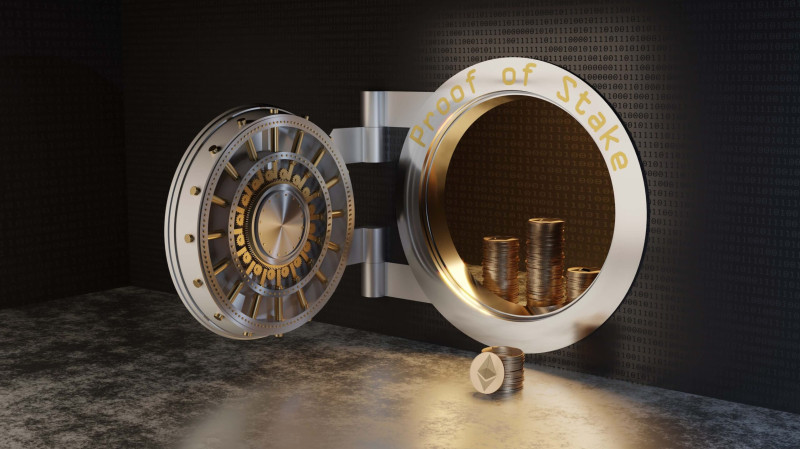
PoS token holders participate as validators by locking tokens into a staking contract. Delegators lock a smaller stake and delegate to validators. Staking rewards vary by coin; some historical rates have been around 3 to 15 percent depending on the network. Top PoS tokens by size include Ethereum, Solana, Toncoin, Cardano, and others, showing the model has real weight.
Electricity Costs and Profit
Mining rigs run all day, every day. One Bitcoin trade uses a lot of power, about as much as a US home uses in over a month. That power costs money, and miners must factor it into profit. In places with cheap power, hobby mining can work; where power is pricey, it’s tough to break even.
Back in 2021, a tweet from Elon Musk and a ban in China shifted the mining map. China’s shutdowns dropped the network difficulty by a big chunk because many machines went offline. Such events show how tied mining is to power and politics, but the code keeps running no matter the headlines.
If you want to try, use a profit calculator to see if your gear and power bill balance. Platforms like NiceHash let you sell or buy computing power without running your own farm. It’s one way to touch the industry without a warehouse of machines, and it supports the digital ledger tech in a small way.
The average cost per kWh in Europe has been around 21 cents, meaning a single Bitcoin transaction could generate a sizable energy bill. Miners must add electricity costs to expenses or they will lose money fast. This is why you see big farms near cheap hydro or wind power, not in crowded cities.
A Real-World Mining Story
A neat example from 2017: three friends built an Ethereum rig for fun. They bought cheap parts and spent most cash on two graphics cards. They ran it for over two years in a plastic shoe rack, then stopped in 2020 because power cost more than earnings. They held the coins they mined, and later the value rose several times, though buying straight ETH would have done better.
This story shows the hobby side of mining. It’s not always about big factories. Sometimes regular people tinker in a closet and learn a ton about how crypto works. The heat and noise are real, but so is the lesson in decentralized money and patience.
They let it run for more than two years, shutting it off because electricity costs vs mining profits meant they weren’t breaking even. They hodl’d all mining profits in Ethereum, and at one point the price rise almost quadrupled their initial investment. If they had just bought Ethereum directly, they’d have done even better, but the project taught them more than a textbook could.
Keeping Your Earnings Safe
When miners get paid, the coins go to a wallet. You need a a proper cryptocurrency wallet key to control those funds. I always tell friends to look at the the safest wallet crypto options before they start. A a cold wallet for crypto or a a cold storage usb keeps keys offline away from hackers.
Before you send or receive, you should always check crypto address twice. A wrong character means lost money. And if you’re new, searching what is crypto for dummies helps build base knowledge. Also watch out for what is a crypto virus so you don’t load bad programs on your rig that steal your earnings.
Mining can be part of a legitimate crypto investment plan if you do it with clear eyes on cost. It’s not a magic money printer. But understanding the machine, the wallet, and the network makes you a smarter user of this weird new money. Take your time and secure your keys first.
Wrapping Up the Basics
I hope this long read helped explain crypto mining without the buzzwords. From blocks to hashrate to pools, the system is just a bunch of computers keeping a public book straight. If you want to dig more, install a demo of a demo of crypto coin mining software on an old GPU and watch the process. Just don’t expect to quit your job over it.
The main takeaway for me is that mining is the engine of Bitcoin’s trust. It’s loud, hot, and competitive, but it works. Next time someone asks you to explain crypto mining, you can tell them about the ATM check and the race for the nonce. That’s the whole game in plain English, and you can share this page to help them out.

Comments on “Explain Crypto Mining in Plain English”
No comments yet. Be the first to share your thoughts.